
Next-Generation Building Energy Management Systems Market Overview: Navigating the Shift Toward Intelligent, Grid-Interactive Facilities
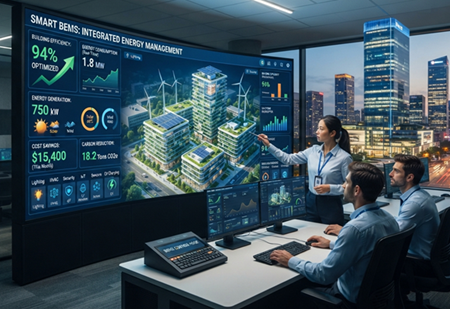
The Next-Generation Building Energy Management Systems Market Overview reveals a landscape in transition from traditional building automation toward integrated platforms that combine AI-driven optimization, digital twin simulation, and grid-interactive capabilities. Organizations increasingly view energy management not as an isolated facilities function but as a strategic capability that connects sustainability performance, operational efficiency, and financial outcomes. This overview captures a market characterized by cloud adoption, retrofit challenges, and expanding capabilities that address the complexity of modern building operations. The competitive landscape features established building technology vendors extending their platforms, specialized energy analytics providers deepening their capabilities, and cloud-native entrants challenging established deployment and pricing models.
Defining the Modern Building Energy Management Platform
Contemporary platforms differ substantially from earlier generations of building automation systems. Today's solutions emphasize AI-powered predictive analytics, real-time optimization across HVAC, lighting, and plug loads, and integration with renewable generation and storage assets. The modern platform serves as a central intelligence layer for building operations, correlating data from sensors, meters, weather services, and grid signals to optimize energy use while maintaining occupant comfort and operational reliability. Key capabilities include automated fault detection, continuous commissioning, carbon accounting, and integration with enterprise sustainability reporting systems. This expanded scope positions building energy management as central to organizational decarbonization strategies rather than a peripheral facilities tool.
Deployment Patterns: Cloud, Hybrid, and the Retrofit Reality
The market exhibits clear deployment preferences, with cloud-based and hybrid architectures representing the fastest-growing segments. Cloud deployment offers scalability across building portfolios, automatic feature updates, and accessibility from distributed facility management teams. However, the substantial installed base of buildings with legacy infrastructure necessitates hybrid approaches that preserve existing investments while adding modern analytics and connectivity layers. This retrofit reality shapes vendor strategies, as successful providers develop solutions that can extract value from existing sensors and controllers while incrementally introducing next-generation capabilities. The deployment diversity ensures that vendors must support multiple architectures rather than assuming greenfield cloud-only strategies.
Buyer Priorities Across Building Segments
Enterprise buyers evaluate building energy management platforms through different lenses depending on their building types and organizational context. Commercial office portfolios prioritize tenant comfort, energy cost reduction, and sustainability certification support. Industrial facilities emphasize process reliability and load management. Institutional buildings—universities, hospitals, government facilities—focus on budget predictability and compliance with public sector sustainability mandates. Across segments, buyers increasingly demand demonstrable return on investment through reduced energy expenditures, avoided compliance penalties, and improved asset valuations rather than technical feature comparisons alone. The rise of outcome-based purchasing reflects a broader maturation of the market where energy management is evaluated as a business enabler rather than a cost center.
Competitive Dynamics and Market Evolution
The competitive landscape features a mix of established building technology incumbents, specialized energy optimization platforms, and cloud provider-native services. Consolidation activity reflects the strategic importance of building energy management as an entry point to broader smart building and sustainability budgets. Meanwhile, open protocols and API-driven architectures enable composable approaches that reduce vendor lock-in concerns and support hybrid environments. The market's evolution suggests that building energy management will increasingly be evaluated as a component of integrated smart building platforms rather than as a standalone category, with interoperability and ecosystem connectivity becoming as important as proprietary optimization algorithms.
➤ Featured Insights from Market Research Future:

 English
 Arabic
 French
 Spanish
 Portuguese
 Deutsch
 Dutch
 Italiano
 Russian
 Romaian
 Portuguese (Brazil)
 Greek