
Discovering Deeper Meaning in Carl Jung Poetry
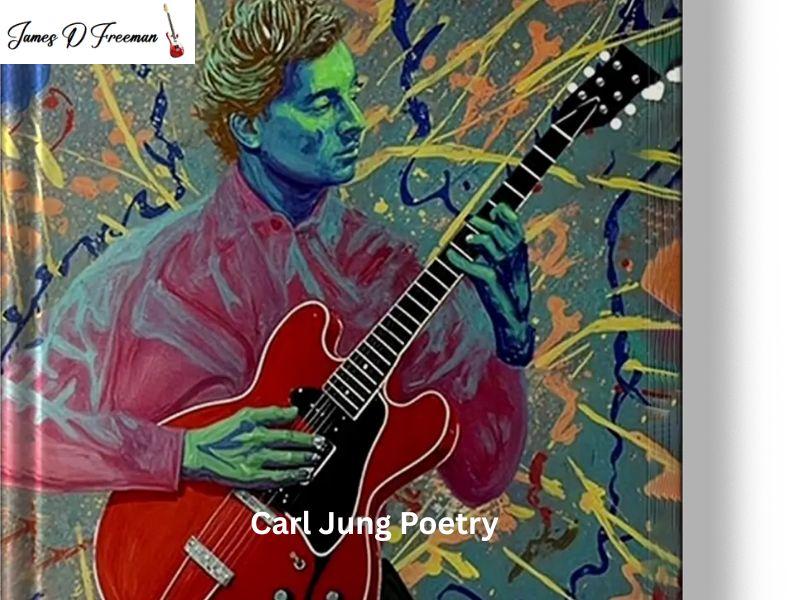
Poetry often gives people a unique way to examine thoughts, emotions, memories, and questions about identity. Unlike straightforward writing, a poem can communicate an idea through metaphor, symbolism, rhythm, and imagery. The psychological concepts developed by Carl Jung provide another interesting perspective for understanding this kind of creative expression. Carl Jung Poetry can be explored through themes such as the unconscious mind, dreams, archetypes, personal transformation, and the search for a deeper sense of self.
Poetry as a Reflection of the Inner Self
Human beings experience many thoughts and emotions that are difficult to explain in ordinary conversation. Poetry provides space for expressing these experiences through carefully chosen words and images.
A poem may describe a quiet room, an empty road, a changing season, or a distant landscape while simultaneously suggesting an emotional state. Readers can connect these images with feelings such as loneliness, hope, uncertainty, or renewal.
This relationship between external imagery and internal experience makes poetry particularly useful for exploring psychological themes.
The Influence of the Unconscious
Jung placed significant attention on the unconscious aspects of human experience. His work suggested that the mind contains patterns, memories, images, and emotions that may exist outside everyday awareness.
Poetry can explore these less visible experiences through indirect language. Instead of stating an emotion directly, a writer may create an image that allows the reader to experieA tree might represent growth, stability, family, or the passage of time. Water might suggest change or emotional movement. A doorway could represent an opportunity, transition, or the unknown.
The meaning of these images depends on context. Readers can consider the surrounding language and their own emotional responses rather than assuming that every symbol has one fixed definition.
Archetypes and Familiar Human Patterns
Jung's theory of archetypes can also provide an interesting approach to reading poetry. Archetypal figures and situations appear repeatedly across myths, stories, and literature.
A poem might feature a traveler searching for direction, a mentor offering guidance, or an outsider struggling to find belonging. These figures can represent universal experiences while remaining connected to the poem's specific narrative.
Archetypal patterns can help readers recognize familiar emotional situations and understand how a poem connects an individual experience with broader human themes.
Exploring the Shadow
Another important Jungian idea is the shadow. In general terms, the shadow represents parts of the personality that a person may find difficult to acknowledge.
Poetry can explore this concept by giving attention to uncomfortable emotions and contradictions. Feelings such as fear, anger, jealousy, disappointment, or insecurity can appear alongside positive emotions such as love and hope.
This creates a more realistic picture of human nature. Instead of suggesting that people are defined by one emotional state, poetry can reveal the complexity of having different feelings at the same time.
Dreams and Imagination
Dreams have been an important subject in psychological discussions and are also common sources of artistic inspiration. Their unusual images and unpredictable narratives can provide poets with material for exploring personal experiences.
A dream-inspired poem may move between different locations or combine familiar people with unfamiliar settings. Rather than providing a logical explanation, the poem can preserve the mysterious quality of the dream.
This approach allows readers to experience poetry as an imaginative space where ordinary rules can be temporarily suspended.
Personal Transformation Through Poetry
Transformation is another theme that connects poetry with Jungian thought. People change throughout their lives as they experience relationships, challenges, responsibilities, successes, and losses.
Poetry can capture these transitions through images of seasons, journeys, endings, beginnings, and rebirth. A poem about leaving an old home, for example, might also represent a change in identity.
Such writing can encourage readers to think about their own experiences of change and how those experiences have influenced their understanding of themselves.
Finding Meaning Through Reflection
One of the strengths of psychologically oriented poetry is its ability to encourage reflection. Instead of simply providing an answer, a poem can leave readers with questions.
Readers may ask why a particular image feels familiar, why a certain line creates an emotional response, or what a recurring symbol might represent. These questions can make the reading experience personal and meaningful.
A poem can therefore function as a starting point for reflection rather than a statement with only one interpretation.
A Balanced Way to Read Jung-Inspired Poetry
When exploring poetry through Jungian concepts, it is useful to remain open-minded. Not every symbol needs to be connected to a psychological theory, and different readers can reasonably reach different conclusions.
The most productive approach is to consider Jungian ideas as one possible lens. Readers can combine psychological interpretation with literary analysis, historical context, personal experience, and the poet's own creative choices.
Conclusion
Carl Jung Poetry offers a fascinating opportunity to explore the connection between literature and the inner world. Themes involving the unconscious, symbolism, archetypes, dreams, the shadow, and transformation can add depth to poetic interpretation. Whether readers are interested in psychology, literature, or personal reflection, these ideas can encourage them to look beyond the surface of a poem. By paying attention to imagery, emotions, recurring patterns, and personal responses, readers can discover how poetry can express complex aspects of human experience in creative and memorable ways.nce the emotion through suggestion.
For example, a poem about walking through an unfamiliar landscape might represent uncertainty about a personal decision. The landscape becomes more than a physical setting; it can become a representation of an inner journey.
Symbols That Invite Interpretation
Symbolism is one of the strongest connections between Jungian ideas and poetry. Symbols allow writers to communicate several layers of meaning through a single image.

 English
 Arabic
 French
 Spanish
 Portuguese
 Turkish
 Dutch
Dutch
 Italiano
 Russian
 Romaian
 Portuguese (Brazil)
 Greek
Greek