
How Can Logistics and Delivery Companies Use WhatsApp AI Automation for Order Tracking?
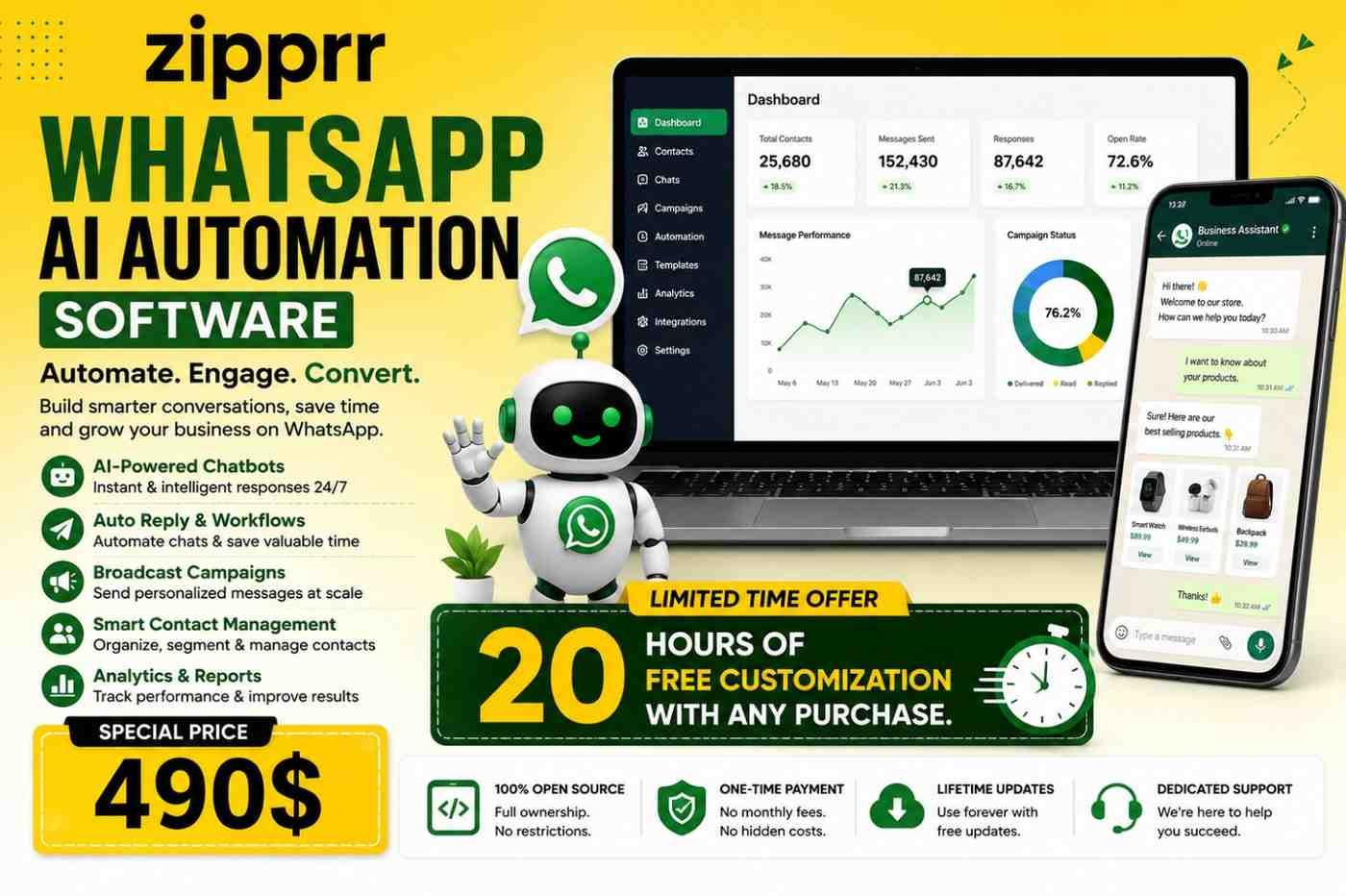
From live shipment updates to failed-delivery recovery, how logistics firms use WhatsApp AI automation to cut 'where is my order?' tickets.
Logistics and delivery companies use WhatsApp AI automation to do the single thing customers want most: tell them where their order is, proactively, in a channel they check. Automated dispatch, out-for-delivery, and delivered notifications, plus an assistant that answers 'where is my parcel?' instantly, dramatically cut the support load that tracking questions create. Because the updates arrive on WhatsApp rather than buried in email, recipients actually see them, which reduces missed deliveries and the costly repeat attempts that follow. In an industry where margins are measured per parcel and failed drops eat straight into them, keeping the recipient informed is one of the cheapest and most effective efficiencies available.
Proactive updates beat 'where is my order?'
The most expensive support ticket in delivery is the one that did not need to exist, the customer chasing a status they could have been told automatically. Running WhatsApp automation software for logistics flips the model from reactive to proactive: the customer is notified at dispatch, when the parcel is out for delivery, and on completion, without ever asking. Sending automated shipment-tracking updates at each milestone means recipients stay informed, are home when the driver arrives, and rarely need to contact support at all.
Answering the questions that remain
Some questions still come, and they should be answered instantly. Deploying an AI delivery assistant lets customers ask about a delay, update a delivery instruction, or reschedule a drop-off in plain language and get an immediate, accurate response drawn from live tracking data. Genuinely complex cases, a lost shipment or a damage claim, are escalated to a human with the full context attached. This structured, operational use of automation sits well within WhatsApp's 2026 rules, which continue to permit purpose-specific flows like tracking and notifications.
Recovering failed deliveries
Failed deliveries are a major hidden cost: the wasted trip, the redelivery, the storage, the frustrated customer. Automation attacks this directly. Building on a self-hosted tracking platform, the system can confirm the address before dispatch, alert the recipient with a tight delivery window, and let them reschedule or redirect if the timing does not work. Catching a problem before the driver sets out is far cheaper than a second attempt, and it turns a likely failed delivery into a successful first-time drop.
Owning the data behind every delivery
Delivery generates a rich stream of data, addresses, timing, preferences, exceptions, that is valuable for improving operations. Many notification tools are subscriptions that hold that data and charge per message at the volumes logistics firms send. Choosing a platform that gives you full ownership of delivery data keeps that operational intelligence in-house and shields a high-volume sender from per-conversation pricing that scales painfully. For a logistics operation running millions of updates, owning the system rather than renting it changes the economics substantially.
Two-way communication with the driver on the ground
Tracking is not only about informing the customer; it is also about coordinating the last mile. Automation lets the recipient share a gate code, a safe-drop instruction, or a better delivery window before the driver arrives, information that prevents exactly the failed attempts that cost the most. On the return leg, the same channel can confirm delivery with a photo or a simple reply, giving the operation a clean record and the customer immediate reassurance. Closing that loop in real time removes a huge amount of the phone-and-email friction that traditionally surrounds delivery exceptions.
The sensible way to adopt this is to sequence it. Begin with the milestone notifications, dispatch, out-for-delivery, delivered, because they cut the largest slice of inbound tickets immediately. Add the tracking assistant next so customers can self-serve status questions, then layer in address confirmation and failed-delivery recovery once the basics are stable. Throughout, keep the messages short and factual, make it easy to reach a human for a real problem, and treat the delivery data you collect as the operational asset it is. Rolled out in that order, each stage pays for the next.
The pattern is consistent: automate the predictable communication, proactive updates and routine tracking questions, and reserve human effort for the genuine exceptions. Logistics companies that make that shift see fewer support tickets, fewer failed deliveries, and customers who feel informed rather than anxious, all of which show up directly in lower costs and higher satisfaction.

 English
 Arabic
 French
 Spanish
 Portuguese
 Deutsch
 Turkish
 Dutch
Dutch
 Italiano
 Russian
 Romaian
 Greek
Greek