
Why Legacy Systems Are Costing Canadian Businesses More Than They Realize
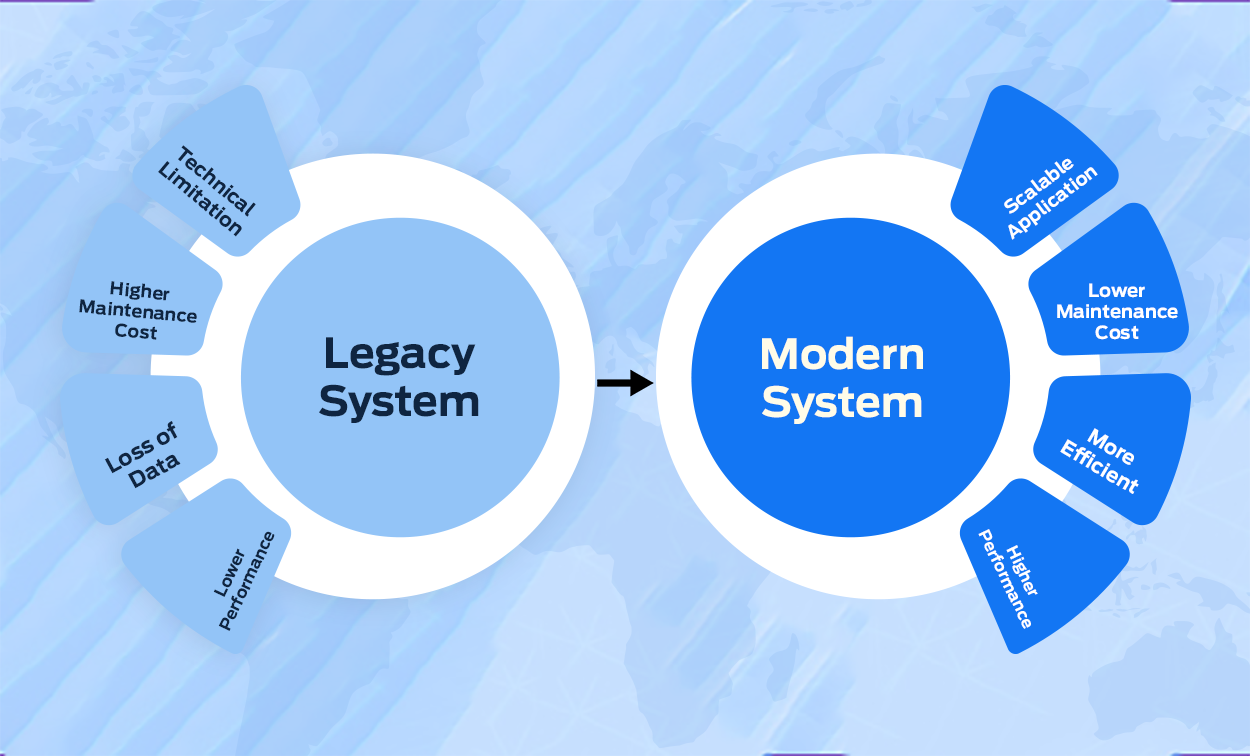
Most businesses don’t wake up one day and decide to run on outdated systems. It happens slowly.
A system that worked fine five or ten years ago continues to run in the background. It still “gets the job done,” so replacing it never feels urgent. Teams adapt, processes adjust, and over time, inefficiencies become normal.
But here’s the reality: legacy systems are not just slowing things down — they are quietly costing Canadian businesses time, money, and growth opportunities every single day.
Let’s break down why this is happening and what it really means for your business.
The Hidden Cost of “It Still Works”
One of the biggest misconceptions is that if a system works, it’s good enough.
On the surface, legacy systems seem stable. They process data, support operations, and keep workflows running. But underneath, they often create friction in ways that are easy to overlook.
Manual workarounds increase. Teams spend extra time fixing small issues. Integrations become harder. Reporting takes longer than it should.
Individually, these may seem like minor inconveniences. But together, they add up to a significant operational cost.
Over a year, that “small inefficiency” can translate into hundreds of lost hours and missed opportunities.
Slower Decision-Making in a Fast-Moving Market
Today’s business environment moves fast. Customers expect quick responses, real-time updates, and seamless experiences.
Legacy systems were not built for this speed.
They often lack real-time data access, making it difficult for leaders to make informed decisions quickly. By the time reports are generated, the situation may have already changed.
This delay creates a gap between what’s happening in the market and how your business responds to it.
In competitive industries, that gap can mean losing customers to faster, more agile competitors.
Integration Challenges That Hold You Back
Modern businesses rely on multiple tools — CRMs, analytics platforms, marketing systems, and more.
The problem? Legacy systems don’t integrate easily with newer technologies.
This leads to disconnected systems where data sits in silos. Teams have to switch between platforms, manually transfer information, or rely on incomplete data.
Not only does this slow down operations, but it also increases the risk of errors.
Instead of working as a connected ecosystem, your technology stack becomes fragmented — and that fragmentation directly impacts productivity.
Rising Maintenance Costs
Many businesses assume keeping an old system is cheaper than replacing it.
In reality, the opposite is often true.
Legacy systems require ongoing maintenance, patches, and support. Finding skilled professionals who understand older technologies can be difficult — and expensive.
Over time, these maintenance costs continue to rise while the system itself delivers less value.
You’re essentially paying more to maintain something that’s holding your business back.
Security Risks You Can’t Ignore
Security is no longer optional. With increasing cyber threats and strict data regulations in Canada, businesses need systems that are secure and up to date.
Legacy systems often lack modern security features. They may not receive regular updates or patches, making them vulnerable to attacks.
A single breach can lead to financial loss, reputational damage, and legal consequences.
What seems like a “stable system” can quickly become a serious liability.
Poor Customer Experience
Customer expectations have changed.
People expect smooth digital experiences — whether they’re booking a service, making a purchase, or interacting with support teams.
Legacy systems struggle to deliver this.
Slow response times, outdated interfaces, and lack of personalization all impact how customers perceive your brand.
And in today’s market, customer experience is a key differentiator.
If your systems can’t support it, your competitors will.
Limited Scalability
As your business grows, your systems should grow with it.
Legacy systems often can’t handle increased demand, new features, or changing business models. Expanding them becomes complex and costly.
This creates a situation where your technology limits your growth instead of supporting it.
Instead of exploring new opportunities, you’re forced to work around system limitations.
The Opportunity Cost
This is the part many businesses overlook.
It’s not just about what legacy systems cost you — it’s about what they prevent you from achieving.
Delayed innovation
Missed market opportunities
Inability to adopt new technologies like AI or automation
Slower time-to-market for new products
These are the real costs, and they are much harder to measure.
Moving Forward: What Businesses Should Consider
Recognizing the problem is the first step.
The next step is understanding that replacing or modernizing systems doesn’t have to be disruptive. With the right approach, businesses can transition gradually, minimizing risk while improving efficiency.
More companies in Canada are now shifting towards flexible, scalable solutions that align with their specific needs rather than forcing their operations to fit into outdated systems.
This is where approaches like Custom Software Development Solutions in Canada are gaining attention, as they allow businesses to build systems tailored to their workflows, goals, and future growth.
Conclusion
Legacy systems may feel safe because they are familiar. But in reality, they are quietly slowing down progress, increasing costs, and limiting growth.
The longer businesses hold onto outdated technology, the more they risk falling behind in an increasingly competitive market.
Modernizing your systems is not just about upgrading technology — it’s about enabling better decisions, improving efficiency, and creating opportunities for long-term growth.
The question is no longer whether to move away from legacy systems, but how soon you’re ready to take that step.
FAQs
1. What is a legacy system in business?
A legacy system is outdated software or technology that is still in use but no longer meets current business needs or standards. These systems often lack flexibility, scalability, and integration capabilities.
2. Why do businesses continue using legacy systems?
Many businesses continue using them because they seem stable, replacing them feels risky, or the cost of change appears high. However, the hidden costs often outweigh these concerns over time.
3. How do legacy systems affect productivity?
They create inefficiencies through manual processes, poor integrations, and slow performance, which leads to wasted time and reduced team productivity.
4. Are legacy systems a security risk?
Yes, they can be. Older systems may not receive regular updates or support, making them more vulnerable to cyber threats and data breaches.
5. When should a business consider upgrading its system?
If your system is slowing down operations, limiting growth, or causing integration issues, it’s a strong sign that modernization should be considered.

 English
 Arabic
 French
 Spanish
 Portuguese
 Deutsch
 Dutch
Dutch
 Italiano
 Russian
 Romaian
 Portuguese (Brazil)
 Greek
Greek