
Why Businesses Are Sending eSignature Requests via SMS — And How to Do It Right
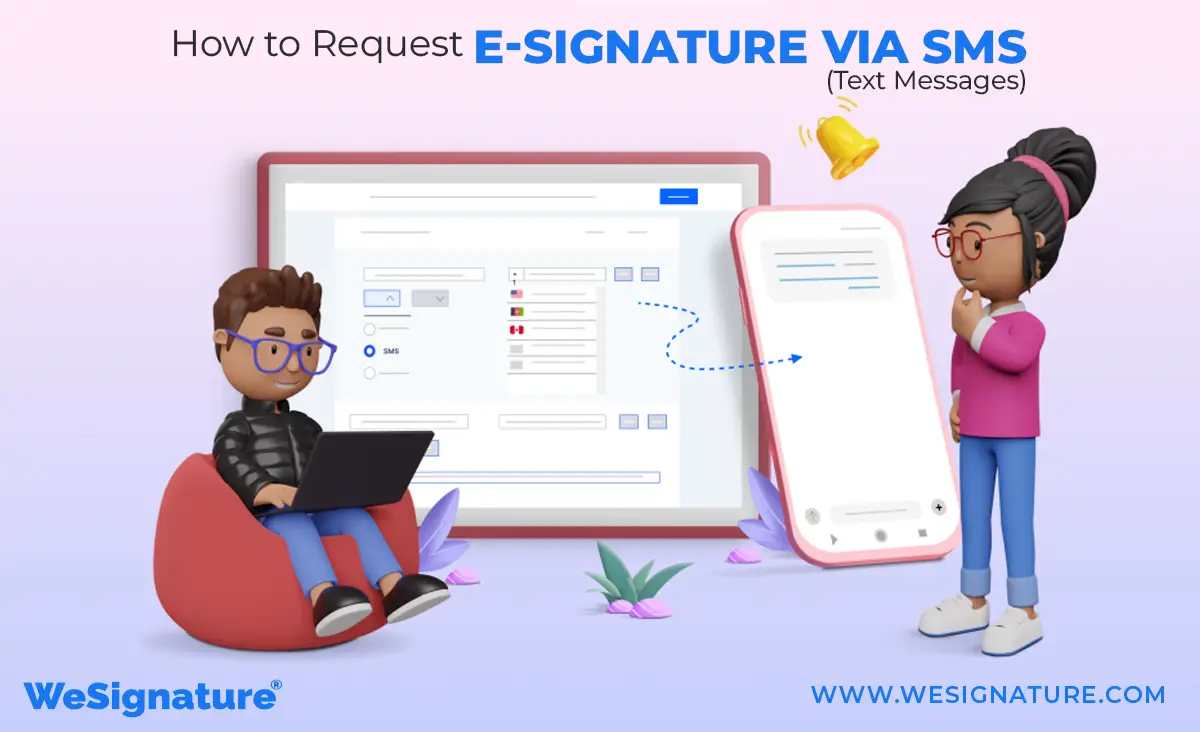
Email has long been the default channel for sending document signing requests. But email has a problem: open rates have declined, inboxes are crowded, and important requests can easily be buried or overlooked. In response, a growing number of businesses are turning to SMS, text messaging, as a faster, more reliable way to get documents signed. Text messages are typically opened within minutes of delivery, making SMS one of the most effective channels for time-sensitive signing requests.
Sending an eSignature request via SMS is simpler than it might sound. The process typically involves uploading a document to an eSignature platform, entering the recipient's mobile phone number, and sending a text message containing a secure link to the document. The recipient clicks the link, reviews the document on their mobile browser, and completes the signature, all without needing to download an app, log into an account, or print a single page.
The legal foundation for this process is well-established. Laws such as the E-SIGN Act in the United States recognize electronically signed documents as fully binding. Signing a document via a link received over SMS is legally equivalent to signing by email or in person, provided the platform captures the necessary evidence: the signer's identity, their intent to sign, and a timestamped audit trail.
One of the clearest advantages of SMS-based signing is accessibility. Not everyone checks email regularly or has access to a desktop computer. But nearly everyone carries a smartphone and reads text messages throughout the day. Sending signing requests via SMS removes friction for recipients who might delay email-based requests, particularly in field-based industries like construction, real estate, and delivery services where workers are rarely at a desk.
For businesses, the efficiency gains are significant. Faster signing means faster deal cycles, shorter onboarding times, and quicker contract execution. In industries where time is money, legal services, insurance, healthcare, sales, reducing the gap between 'document sent' and 'document signed' can have a measurable impact on revenue and operations.
Crafting an effective SMS signing request requires attention to brevity and clarity. A well-designed SMS should greet the recipient by name, clearly state the purpose of the document, include the signing link, and optionally mention a deadline. Because SMS messages are read in seconds, every word counts. Avoid jargon, keep the message under 160 characters where possible, and make the call-to-action unmistakable.
Security is also a priority. Reputable eSignature platforms protect SMS-delivered signing links with encryption, expiring URLs, and optional two-factor authentication, so even if a message is intercepted or forwarded, the document remains secure. Audit trails automatically log the signing event, providing an immutable record for compliance or legal purposes.
SMS eSignature is not a replacement for all signing methods, but for fast-turnaround requests, mobile-first audiences, and time-sensitive agreements, it is one of the most effective tools available. If you are still relying solely on email for signature requests, SMS is an upgrade worth making.

 English
 Arabic
 Spanish
 Portuguese
 Deutsch
 Turkish
 Dutch
Dutch
 Italiano
 Russian
 Romaian
 Portuguese (Brazil)
 Greek
Greek