
Barge Builders in UAE: How Smart Engineering Is Transforming Barge Construction
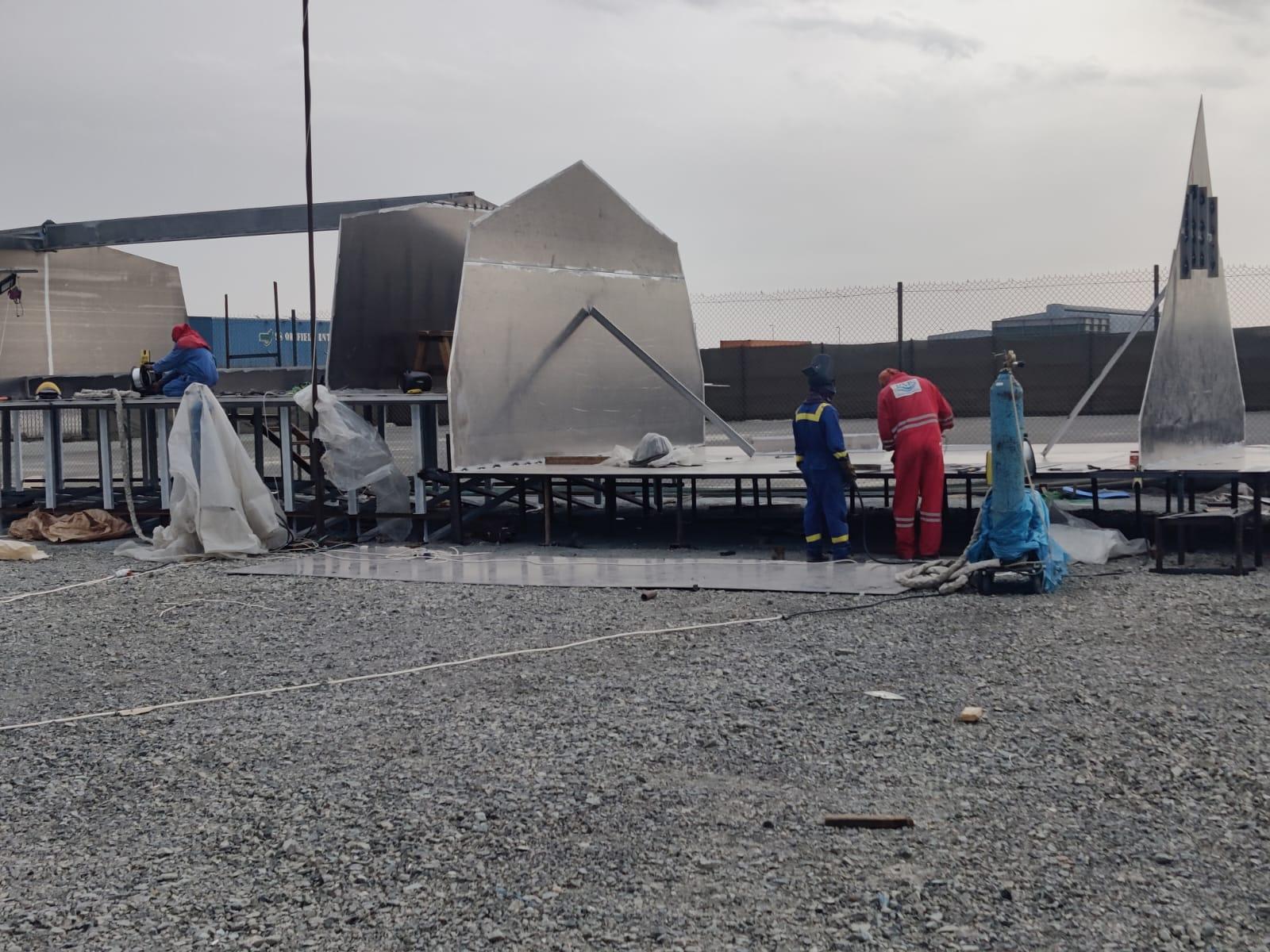
The marine industry is continuously evolving with new technologies, advanced engineering methods, and innovative vessel designs. Barges play an important role in this development because they are widely used for transporting heavy cargo, construction materials, industrial equipment, and other large goods through waterways. Modern engineering is transforming how these vessels are designed, manufactured, and maintained. Today, barge builders in UAE are increasingly focusing on smarter construction methods that improve vessel performance, operational safety, durability, and fuel efficiency.
The United Arab Emirates has become an important centre for maritime transportation and industrial development. Its strategic location, modern port infrastructure, and growing shipping activities create strong demand for reliable marine vessels. According to UNCTAD, UAE container port throughput reached approximately 21.1 million TEUs in 2024. The country's maritime sector also plays a significant role in supporting economic growth, international trade, and industrial transportation.
The Growing Importance of Smart Engineering in Barge Construction
Smart engineering refers to using modern technologies, accurate planning, advanced materials, and improved manufacturing techniques to develop better marine vessels. In barge construction, these methods help engineers create vessels that can handle heavy loads while maintaining stability and structural strength.
Traditional construction methods often depend on manual calculations and conventional fabrication processes. However, modern engineering introduces computer-based design systems, digital modelling, automated machinery, and advanced quality-control procedures.
These technologies allow engineers to identify possible design problems before construction begins. They can also evaluate different hull shapes, loading capacities, and structural arrangements to determine which design offers the best performance.
As a result, modern barges can be manufactured with greater accuracy, reduced material wastage, and improved operational reliability.
How Digital Technology Is Improving Barge Design
Digital technology has become an important part of modern marine engineering. Computer-Aided Design (CAD) and 3D modelling software allow engineers to prepare detailed vessel designs before the manufacturing process starts.
Through digital models, engineers can examine the complete structure of a barge, including its hull, internal compartments, deck arrangements, and supporting structures. This makes it easier to identify design limitations and make necessary improvements.
Simulation software can also help evaluate how a vessel may perform under different operating conditions. Engineers can study loading distribution, water resistance, structural pressure, and stability.
Another important development is digital documentation. Technical drawings, construction measurements, and inspection records can be maintained electronically, helping improve communication between design and production teams.
These improvements reduce the possibility of costly errors and support more efficient construction planning.
Advanced Materials for Stronger and More Durable Barges
Material selection is one of the most important factors in barge construction. Barges frequently operate in demanding marine environments where structures are exposed to seawater, changing temperatures, heavy cargo loads, and continuous operational pressure.
Marine-grade steel is commonly used for constructing heavy-duty barges because of its strength, durability, and ability to withstand substantial loads. Modern fabrication techniques help improve welding accuracy and structural consistency.
In applications where reduced vessel weight is important, aluminum barge builders may consider marine-grade aluminium for suitable vessel designs. Aluminium offers a favourable strength-to-weight ratio and natural corrosion resistance, making it useful for certain marine applications. However, material selection depends on vessel size, loading requirements, operating conditions, and project specifications.
Engineers also consider protective coatings and corrosion-resistant treatments to protect metal surfaces from environmental damage. Proper surface preparation, coating application, and regular inspection can extend the working life of a vessel.
Automation and Modern Manufacturing Techniques
Automation is changing the way marine vessels are manufactured. Advanced cutting machines, automated welding equipment, and precision fabrication systems help improve construction accuracy and production efficiency.
In traditional fabrication, many operations require extensive manual work. Although skilled workers remain essential, modern machinery can perform repetitive tasks with greater consistency.
Computer-controlled cutting systems help produce metal components according to exact measurements. Automated welding equipment can maintain consistent welding parameters, while digital measurement tools help identify dimensional differences during assembly.
These technologies provide several advantages:
-
Improved manufacturing accuracy.
-
Reduced material wastage.
-
Better consistency in fabrication.
-
More efficient production planning.
-
Improved workplace safety.
-
Reduced chances of manufacturing errors.
Combining skilled professionals with modern equipment allows shipyards to maintain high construction standards while managing complex marine projects.
Improving Fuel Efficiency Through Better Hull Design
Fuel efficiency is an important consideration in modern marine transportation. Although many barges operate at relatively low speeds, their size, cargo weight, and operating conditions can influence energy consumption.
Smart engineering helps improve efficiency through suitable hull dimensions, balanced weight distribution, and reduced water resistance.
Hydrodynamic analysis allows engineers to examine how water flows around the vessel. By improving hull geometry, they can reduce unnecessary resistance and support more efficient movement through water.
Engineers also consider propulsion requirements when designing self-propelled barges. Selecting suitable engines, propellers, and power systems can improve overall operational performance.
For non-self-propelled barges, design considerations may include towing arrangements, hull resistance, and compatibility with tugboats.
These improvements can help operators manage fuel expenses and reduce environmental impact over the vessel's operational life.
Enhancing Safety and Stability with Intelligent Engineering
Safety is a major priority in commercial barge construction because these vessels frequently transport heavy industrial materials and equipment.
A well-designed barge must maintain stability under different loading conditions. Engineers calculate the vessel's displacement, centre of gravity, freeboard, and loading distribution to ensure safe operation.
Modern design software makes it possible to examine different loading scenarios before a vessel enters service. This helps engineers identify potential stability problems and improve compartment arrangements.
Structural engineering also plays an important role. Deck strength, bulkheads, welding quality, and load-bearing components must be designed according to the vessel's intended application.
Additional safety features may include navigation equipment, emergency systems, suitable access arrangements, and fire-protection installations.
Regular technical inspections and maintenance further support safe and reliable marine operations.
The Role of Sustainable Engineering in Modern Barge Construction
Environmental responsibility is becoming increasingly important in the maritime industry. Modern aluminium barge manufacturers are also exploring ways to combine lightweight construction materials with efficient designs and durable marine components.
The International Maritime Organization has established a target of achieving net-zero greenhouse gas emissions from international shipping by or around 2050. Although this target primarily addresses international shipping, it also encourages wider innovation across the maritime supply chain.
Barge construction can contribute to sustainability through improved hull designs, efficient propulsion systems, better maintenance planning, and responsible material management.
Long-lasting protective coatings can reduce the frequency of major repairs, while efficient production processes help minimise industrial waste.
Future developments may also include alternative fuels, hybrid propulsion systems, and advanced energy-management technologies, depending on operational requirements.
Growing Opportunities for Barge Construction in the UAE
The UAE's expanding maritime infrastructure creates opportunities for different types of marine vessels. Barges are particularly important for offshore projects, port development, construction activities, and transportation of oversized materials.
In 2024, UNCTAD reported approximately 21.1 million TEUs of container port throughput for the UAE. This highlights the scale of maritime activity and the importance of efficient supporting vessels.
Demand for specialised barges can increase with industrial expansion and infrastructure development. Different projects require different vessel configurations, including flat-top barges, deck cargo barges, material transportation barges, and specialised working platforms.
An experienced barge building company understands the importance of designing vessels according to project requirements, operating conditions, and expected cargo loads.
VU Marine focuses on delivering marine solutions that support commercial and industrial requirements. Its capabilities in marine construction, maintenance, repair, and specialised vessel solutions reflect the importance of combining technical expertise with practical engineering knowledge.
Future Trends in Smart Barge Construction
The future of barge construction will be influenced by continuous improvements in digital technology, automation, material science, and environmental engineering.
Artificial intelligence and data-based monitoring systems may help operators identify maintenance requirements before serious mechanical or structural problems develop.
Digital twins can also provide virtual representations of physical vessels, allowing engineers to study performance and evaluate maintenance strategies using operational data.
Another important trend is modular construction. Instead of manufacturing every structural section as a single complex assembly, certain components can be produced separately and integrated during the construction process. This approach can improve production planning and simplify some manufacturing operations.
Advanced inspection technologies, including digital monitoring and non-destructive testing, will also support better quality management.
These developments are expected to make marine vessel construction more accurate, efficient, and environmentally responsible.
Conclusion
Smart engineering is transforming barge construction by introducing better design methods, advanced materials, automated manufacturing, and improved safety systems. These developments help create vessels that are stronger, more reliable, and suitable for demanding marine operations.
The UAE's growing maritime industry makes efficient barge construction increasingly important for transportation, offshore support, and industrial development. By adopting modern engineering practices and focusing on quality, durability, and operational efficiency, VU Marine aims to support the changing requirements of the marine sector.
As technology continues to advance, smart engineering will remain an important part of developing the next generation of reliable and efficient barges.

 Arabic
 French
 Spanish
 Portuguese
 Deutsch
 Turkish
 Dutch
 Italiano
 Russian
 Romaian
 Portuguese (Brazil)
 Greek