
Technology Transformation Consulting: The CTO’s Role in Digital Change
The CTO determines what capabilities will be left in-house after technology transformation consulting. Digital transformation consulting services provide the expertise and speed required. The role of the CTO in digital transformation is to define strategy, ensure investment maps back to business outcomes and see that legacy systems are decommissioned safely.
Often, transformation will be credited to a platform or partner. But the engineers who have been involved may attribute much of its success to the technology leadership behind it. In many organizations, this will be the CTO. Banks, hospitals, manufacturers and retailers can purchase similar pieces of software from similar vendors and still achieve very different outcomes.
Much of this comes down to the technology leadership in digital transformation provided. A question which rarely gets asked but is very important is: how much capability will you own at the end of the contract?
This is where the CTO will have the answers.
What is Technology Transformation Consulting?
Technology transformation consulting helps businesses assess, modernize and align their technology infrastructure, systems and capabilities with strategic business objectives.
While digital transformation consulting services bring external expertise across areas such as cloud adoption, AI integration and legacy system modernization, the CTO ensures that these initiatives support business priorities and build lasting internal capabilities.
What is the Role of a CTO in Digital Transformation?
The CTO is responsible for mapping business objectives to the technologies that will deliver them. This includes defining the architecture, sequencing investment, managing risks and ensuring the right people are available to run the systems in the long term.
A large part of this is translating questions from the business into answers that they can act on. For example, ‘What does migrating to the cloud do for our margin?’ from the finance director or ‘Why are we delaying the release date?’ from the platform lead.
The CTO will provide answers to these questions that can be acted on quickly to ensure momentum continues. This is at the heart of how CTOs drive enterprise digital transformation.
A good CTO will provide a strong level of translation which will help ensure that programs stay on track through budget cycles and leadership changes.
What are the Key Responsibilities of a CTO in Technology Transformation?
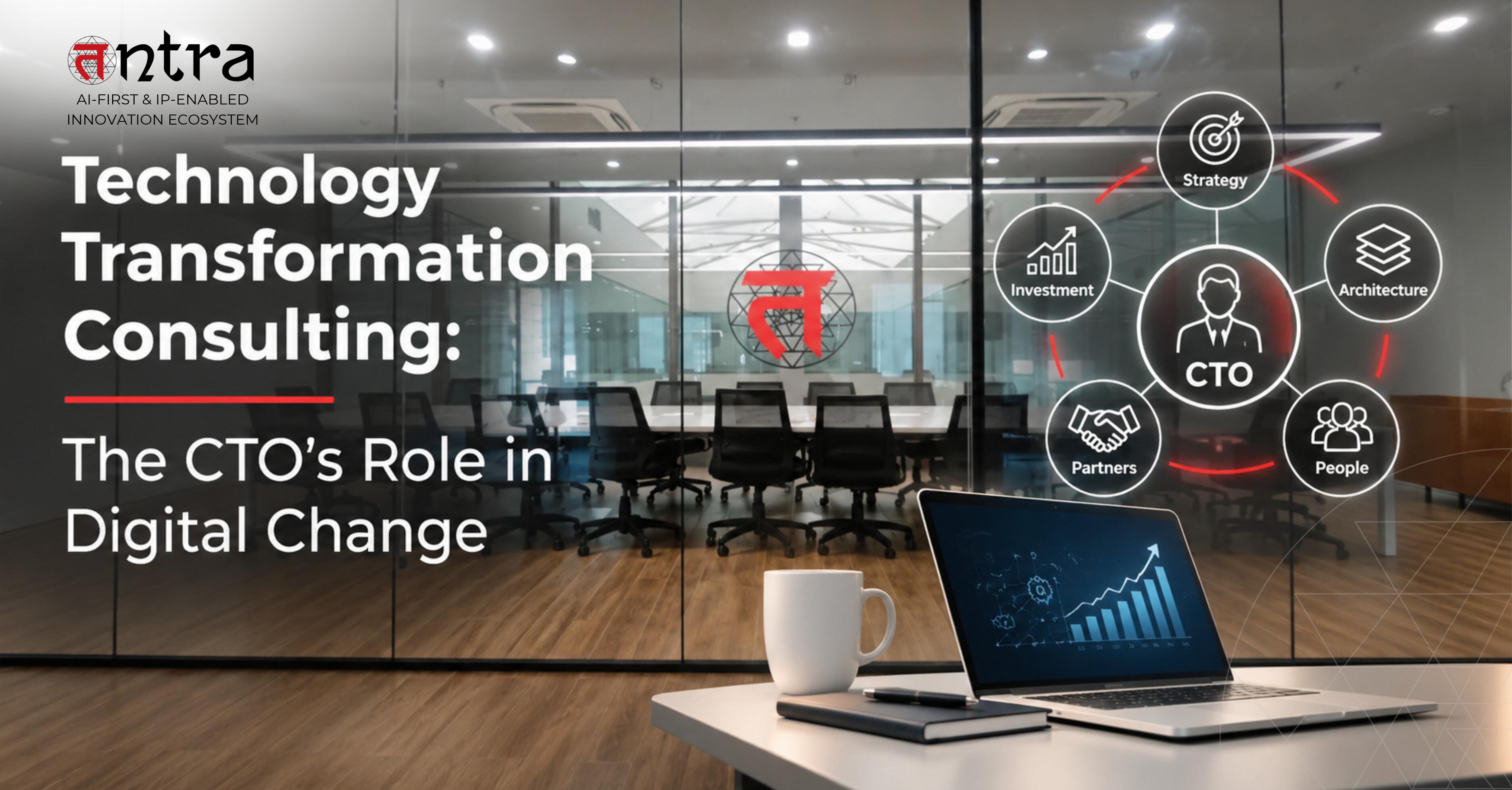
There are five things the CTO is responsible for:
-
Strategy – The CTO will define the enterprise digital transformation strategy and provide the sequence for delivery.
-
Architecture – The CTO will define the IT modernization strategy that dictates which systems will be migrated to the cloud, rebuilt or decommissioned.
-
Investment – All lines in the technology budget must map back to a business outcome.
-
People – Teams must have the capabilities to run and maintain what has been built.
-
Partners – All external partners must have clear terms for what they will deliver at the end of the engagement, including knowledge transfer and capability ownership.
These responsibilities help establish technology governance throughout the transformation journey.
How does a CTO Develop a Digital Transformation Strategy?
A CTO-led digital transformation strategy will start with the business outcomes and work backwards.
A good CTO will start with a basic understanding of what systems they currently have, where the data is, how much technical debt they have and what realistic outcomes can be delivered by the current team.
They will narrow this down to three to five outcomes that the board is already interested in. For example, faster product launches for a retailer or reduced cost per claim for an insurer.
The technology transformation roadmap will then be broken into roughly 90-day chunks, with each ending in a deliverable for a customer or employee. Metrics, review dates and decision-making responsibilities will also be defined at this stage.
Digital product engineering will provide discipline to this by ensuring every initiative is treated like a product.
How can CTOs Align Technology Strategy with Business Goals?
The most reliable way to ensure that technology strategy maps back to business goals is to have a business owner for every initiative. They will commit to a measurable target and attend a predefined review. Funding can be released in phases as outcomes are achieved.
Many CTOs will categorize spending into three categories:
-
Run the business – Maintaining existing systems, security and operational continuity.
-
Grow the business – Improving existing products, services and operational capabilities.
-
Transform the business – Building new technology capabilities and business opportunities.
This means the leadership can see in one place where the spending is going.
Depending on the initiative, technology transformation KPIs may include cost per transaction, time to market, system availability, customer adoption and operational efficiency.
What Challenges do CTOs Face When Modernizing Enterprise Technology?
Common challenges include legacy systems that few people fully understand, data spread across departments, lack of certain capabilities, conflicting priorities and high dependency on vendors.
The biggest challenge is often legacy systems. You may have a claims engine written in the late 1990s, and it is still processing claims for the policies you sell. The two engineers who know the most about it may be nearing retirement.
As a result, the CTO will plan to modernize legacy systems in an evolutionary way. You will modernize one function at a time whilst still using the old system where necessary.
Each application will be prioritized based on value to the business and risk. It can then be rehosted, refactored, replaced or decommissioned.
A well-defined modernization strategy should also consider system dependencies, data integrity, security and business continuity before existing systems are retired.
What does the Enterprise Own at the End of Technology Transformation?
Technology consulting for digital transformation is typically measured on delivery. Did the system go live? Was the migration completed? Was the project kept within budget?
Whilst these are fair things to measure, when looking at it from a longer-term perspective, there is one more thing to consider: technology capability ownership.
Six months after the consultants have left, you will want to make your first real change. If the code, documentation and rationale for key decisions are with the vendor, you may have to start with a new contract. If they are with your own engineers, you can start with a planning session.
CTOs who get this sorted early will often include terms in the contract. This can include shared repositories from week one, pairing your engineers with the delivery team and a date to run the platform in-house.
Clarifying IP ownership, licensing rights and knowledge transfer expectations can also help reduce unnecessary vendor dependency.
When should a business look to technology transformation consultants?
There are 4 reasons to engage external support. Firstly, if there is a gap in capability (usually AI, cloud or cyber security). It will be more expensive to learn as you go. Secondly, if the program has gone over time or budget and you need an independent review. Thirdly, if there is a big decision to be made around a platform and you want a second opinion from people who have made the same decision.
Fourthly, if your business is growing faster than your leadership bench. If you have 40 engineers and increasing you may want some senior tech leadership much earlier than you can justify having a full time executive. CTO Advisory Services and CTO as a Service can help.
In all cases, how to choose the right technology consulting partner will highlight that you should look at how well they deliver capability.
How does Tntra Work With CTOs?
Tntra is an AI-First, Human-Guided, IP-Led innovation consulting company, and our practitioner-led technology advisory brings people who have led technology organizations to work with your CTO.
We back this up with AI-first platforms such as T(u)LIP and Shruti AI and engineering expertise in areas such as FinTech and HealthTech.
Our i³ enterprise innovation framework provides a human-guided, AI-enabled system for turning ideas into risk-mitigated innovation and measurable outcomes with global impact.
Our engineering PODs work with your teams throughout to ensure knowledge is transferred and the enterprise owns what they have created, subject to the agreed ownership and licensing terms.
Technology transformation consulting should not simply leave your business with modern systems. It should leave your teams with the capability to operate, improve and evolve those systems.
If you are looking to do a transformation and want to own it, please get in touch with the Tntra team.
Frequently Asked Questions
1. What is the role of a CTO in digital transformation?
The CTO maps business goals to technology solutions, defines the technology roadmap, manages technical risks and determines what capabilities the enterprise should own after transformation.
2. How does a CTO lead digital transformation?
A CTO identifies a small number of clear business outcomes, sequences the work into measurable delivery phases and ensures alignment between business and engineering teams.
3. What are the responsibilities of a CTO in technology transformation?
The five core responsibilities of a CTO in technology transformation are strategy, architecture, investment, people and external partner management.
4. Why is technology strategy important for digital transformation?
Technology strategy helps align technology investments with business outcomes, prioritize modernization initiatives, manage risks and avoid unnecessary spending.
5. How can a CTO overcome digital transformation challenges?
CTOs can modernize systems in phases, prioritize applications based on business value and risk, develop internal capabilities and bring in experienced practitioners where required.
6. When should a company hire a CTO consultant?
A company should consider hiring a CTO consultant when it is growing quickly, lacks senior technology leadership, faces a major technology decision or needs to recover a transformation program that has exceeded its budget or timeline.
7. What do digital transformation consulting services include?
Digital transformation consulting services can include technology assessments, strategic roadmap development, cloud adoption, legacy system modernization, AI integration, technology governance and implementation support.

 Arabic
 French
 Spanish
 Portuguese
 Deutsch
 Turkish
 Dutch
 Italiano
 Russian
 Romaian
 Portuguese (Brazil)
 Greek