
Access Control Reader Market Outlook: Strategic Projections and Growth Prospects
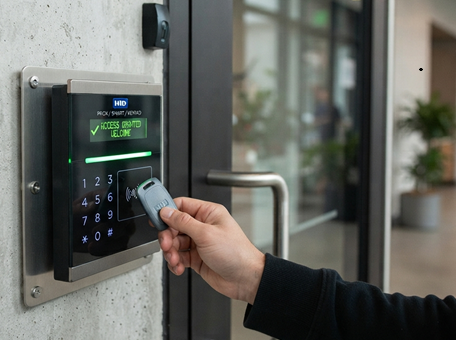
Market Outlook and Future Growth Projections
The Access Control Reader Market Outlook presents a vision of steady expansion and technological evolution as organizations continue prioritizing security investments while embracing modern access control capabilities. This forward-looking analysis examines the factors expected to shape market evolution in coming years, including technology trends, security requirements, and competitive dynamics that will influence vendor strategies and market outcomes. Stakeholders seeking to position themselves advantageously for future opportunities will benefit from understanding the trajectory of market development and the forces likely to determine success and failure across different segments. The outlook reflects fundamental confidence in the market's durability while acknowledging the transitions that will reshape competitive dynamics and customer expectations over time.
Multi-Modal Readers Becoming Standard Expectation
Multi-modal readers capable of accepting multiple credential types will become standard expectations within the access control reader market, enabling organizations to address diverse user populations and transition scenarios. Readers supporting proximity cards, smart cards, mobile credentials, and biometrics from single devices provide flexibility that simplifies deployment while reducing hardware costs. This capability enables organizations to support users with different preferences and device availability while providing migration paths from legacy technologies to modern approaches. Multi-modal readers also provide redundancy, ensuring access remains available even if specific credential technologies fail. As organizations evaluate reader investments, multi-modal capability will increasingly influence purchasing decisions, driving vendors to incorporate diverse credential support into product designs.
Artificial Intelligence Enhancing Reader Intelligence
Artificial intelligence will increasingly enhance reader intelligence, transforming readers from simple credential capture devices to sophisticated security sensors capable of advanced threat detection. On-device AI processing enables facial recognition, behavioral analysis, and anomaly detection without requiring constant connection to central systems. Edge intelligence improves response times while reducing network bandwidth requirements and enabling operation during network outages. AI capabilities enable readers to identify tailgating, forced entry, and other security threats that traditional systems might miss. Privacy-preserving AI techniques address concerns about biometric data handling while enabling beneficial security capabilities. Organizations will increasingly evaluate readers based on intelligence capabilities alongside traditional security features.
Cloud Management Transforming Operational Models
Cloud management will increasingly transform operational models for access control readers, offering scalability, remote administration, and integration capabilities that address limitations of traditional on-premises systems. Cloud platforms enable centralized management of distributed readers, allowing security teams to monitor and configure devices across multiple locations from unified interfaces. Automatic firmware updates ensure readers remain current with security patches and feature enhancements. Integration with other cloud services including video surveillance and visitor management creates comprehensive security ecosystems. Small and medium organizations benefit from cloud deployment by accessing enterprise-grade capabilities without substantial infrastructure investments. While on-premises systems remain preferred for certain high-security applications, cloud adoption continues accelerating as organizations recognize operational advantages.
Strategic Recommendations for Market Participants
The future outlook presents substantial opportunities for stakeholders who position themselves strategically to capitalize on emerging trends and address evolving market requirements. Manufacturers should prioritize innovation in biometrics, mobile credentials, and artificial intelligence while maintaining reliability and security that customers expect. Integrators should develop expertise in cloud deployment, cybersecurity, and multi-vendor integration to address evolving customer needs. Organizations evaluating reader investments should consider long-term technology roadmaps and integration potential alongside current requirements. Security leaders should develop comprehensive strategies that address physical security, cybersecurity, and privacy considerations in integrated frameworks. Stakeholders who develop comprehensive understanding of market dynamics and future trends will be positioned for success in the evolving reader market.
➤ Featured Insights from Market Research Future:
Transportation Analytic Market

 Arabic
 French
 Spanish
 Portuguese
 Deutsch
 Turkish
 Dutch
 Italiano
 Russian
 Romaian
 Portuguese (Brazil)
 Greek