
Tug Builder in UAE: Enhancing Tugboat Safety with Advanced Marine Engineering
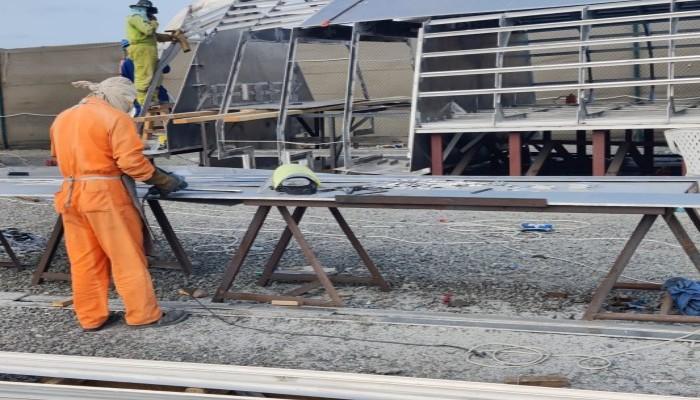
Tugboats play an essential role in modern maritime transportation by helping large vessels move safely through ports, harbours, and restricted waterways. These specialised vessels provide the power and control required to assist cargo ships, tankers, container vessels, and other commercial ships during berthing, unberthing, and manoeuvring. A reliable tugboat improves port safety, reduces operational difficulties, and supports the smooth movement of marine traffic. As maritime activities continue to expand, the demand for advanced tugboat construction and dependable marine engineering is also increasing.
A professional tug builder in UAE focuses on developing reliable vessels that can handle demanding harbour operations, offshore activities, and commercial towing requirements. These vessels combine strong construction, powerful propulsion systems, advanced navigation equipment, and modern safety features to deliver consistent performance in different marine environments.
Growing Demand for Tugboat Construction in the UAE
The UAE has become an important centre for international shipping and maritime transportation. Its strategic location, modern port infrastructure, and growing trade activities create strong demand for efficient harbour support vessels.
According to maritime industry figures reported by UAE authorities, the country's ports handled approximately 21 million TEUs of container traffic in 2023. The maritime sector contributed around AED 135 billion to the national GDP. UAE ports also receive more than 33,000 vessels annually, demonstrating the scale of maritime activity.
These developments increase the need for tugboats that can support vessel movements, improve harbour efficiency, and maintain safe port operations. Modern construction techniques are helping the industry develop vessels that meet different operational requirements, from compact harbour assistance to powerful offshore towing.
Importance of Reliable Tugboats in Port Operations
Tugboats are designed to perform operations that larger commercial vessels cannot easily manage on their own. Large ships often have limited manoeuvrability, especially when entering narrow channels, approaching terminals, or moving through crowded harbour areas.
Tugboats provide additional pulling and pushing power to guide these vessels safely. Their main responsibilities include:
-
Assisting ships during arrival and departure.
-
Supporting berthing and unberthing operations.
-
Controlling vessel movement in restricted waterways.
-
Providing emergency towing assistance.
-
Supporting offshore and marine construction activities.
-
Helping vessels during challenging weather conditions.
The performance of a tugboat depends on its engine power, hull design, stability, manoeuvrability, and towing equipment. Proper engineering ensures that these vessels can operate safely under demanding marine conditions.
Advanced Materials Used in Tugboat Construction
Material selection is an important part of modern tugboat manufacturing. The construction material affects vessel weight, strength, fuel efficiency, corrosion resistance, and maintenance requirements.
Steel is commonly used in heavy-duty commercial tugboats because it provides excellent structural strength and durability. It is suitable for vessels that regularly perform demanding towing operations and work in challenging marine environments.
Aluminium is another important material used in marine construction. Its lower weight can help improve vessel performance and fuel efficiency when the design is properly engineered. It also offers good corrosion resistance when suitable marine-grade alloys and protective practices are used.
Experienced aluminium tug manufacturers consider the vessel's operating conditions, required engine power, structural design, and expected workload before selecting construction materials. Proper material selection helps achieve a balance between strength, weight, durability, and long-term operating costs.
Important Features of Modern Tugboats
Building a dependable tugboat requires careful planning and attention to several technical features. Each component must work together to deliver the required power, safety, and operational efficiency.
1. Powerful Propulsion Systems
The propulsion system is one of the most important elements of a tugboat. These vessels require strong engines to generate sufficient thrust for towing and pushing large commercial ships.
The selection of engines depends on the vessel's size, expected workload, operating environment, and towing requirements. Modern propulsion arrangements are designed to improve manoeuvrability and provide better control during complex harbour operations.
2. Strong and Durable Hull Construction
A tugboat must withstand continuous operational stress, contact forces, changing weather, and challenging water conditions. Its hull should provide structural strength while maintaining stability and manoeuvrability.
Marine-grade steel and aluminium are commonly considered for different vessel designs. Engineers evaluate hull dimensions, structural arrangements, and weight distribution to ensure that the vessel meets its intended performance requirements.
3. Advanced Navigation and Control Equipment
Modern tugboats require accurate navigation and communication systems to operate safely around large vessels and busy terminals. GPS, radar, electronic navigation displays, communication equipment, and monitoring systems help operators understand surrounding traffic and control vessel movements.
4. Effective Towing Equipment
Towing equipment is essential for performing demanding harbour and offshore operations. Winches, towing hooks, ropes, and specialised deck arrangements must be selected according to the vessel's intended duties.
Reliable towing systems allow tugboats to assist large vessels while maintaining better control during different operational situations.
Modern Technologies Improving Tugboat Manufacturing
Technology has changed the way marine vessels are designed and constructed. Computer-aided design software allows engineers to develop detailed vessel models before manufacturing begins. These models help evaluate hull shape, structural strength, weight distribution, and available onboard space.
Advanced welding methods also improve the quality of marine construction. Proper welding procedures create strong connections between structural components and help maintain the vessel's overall integrity.
Digital monitoring systems are another important development. They allow operators to monitor engine performance, fuel consumption, temperature, and other essential operating parameters. Early identification of technical problems can help reduce unexpected breakdowns and improve maintenance planning.
Modern aluminum tug builders also focus on lightweight construction methods, accurate fabrication, and efficient hull arrangements. These techniques can help create vessels that meet specific operational requirements while maintaining suitable strength and stability.
Safety Considerations During Tugboat Construction
Safety is a major priority in tugboat design because these vessels frequently work close to large ships, port structures, and other marine traffic. Their construction must consider crew protection, operational stability, emergency equipment, and reliable onboard systems.
A well-designed tugboat should include suitable firefighting equipment, emergency communication systems, lifesaving appliances, and clearly arranged working spaces. Deck layouts should provide safe movement for crew members while allowing convenient access to towing equipment.
Stability calculations are equally important. Engineers must consider the vessel's weight distribution, loading conditions, towing forces, and operating environment. Proper stability helps reduce the risk of dangerous movements during demanding operations.
Construction and testing should also follow applicable maritime regulations and classification requirements. Machinery, electrical installations, propulsion systems, and safety equipment need appropriate inspection before the vessel enters service.
Maintenance and Long-Term Operational Performance
Even a well-constructed tugboat requires regular maintenance to remain dependable. Continuous engine operation, towing activities, and exposure to seawater can gradually affect machinery, hull surfaces, and onboard equipment.
Routine inspections help identify problems before they become serious. Important maintenance activities include checking engines, inspecting propellers, examining hull structures, testing electrical systems, and maintaining towing equipment.
Corrosion protection is particularly important for vessels operating in marine environments. Suitable protective coatings, regular cleaning, and planned inspections help maintain hull condition and extend the vessel's service life.
Preventive maintenance also improves operational availability. Instead of waiting for equipment failure, operators can identify worn components and replace them according to maintenance schedules. This approach reduces unexpected downtime and supports more efficient harbour operations.
Role of Modern Tugboat Construction Companies
A professional tugs building company must understand the technical and operational requirements of different marine applications. Tugboats used in commercial ports may have different specifications from those designed for offshore support, industrial towing, or specialised marine operations.
The construction process generally begins with requirement analysis and vessel design. Engineers evaluate the expected towing capacity, engine power, hull dimensions, fuel requirements, crew facilities, and safety equipment.
After the design stage, fabrication and assembly are carried out according to suitable engineering procedures. The vessel then undergoes inspections and performance testing to check its propulsion system, navigation equipment, structural integrity, and overall functionality.
Proper coordination between design, fabrication, installation, and testing helps ensure that the finished vessel is suitable for its intended duties.
How VU Marine Supports Modern Marine Construction
VU Marine is a leading shipbuilding and marine services company based in the UAE since 2009. The company provides marine engineering and vessel-related solutions for different commercial and industrial requirements.
Its services include aluminium boat building, barge and tugboat construction, ship repair, retrofitting, marine consultancy, painting, maintenance, and commissioning.
Tugboat construction requires an understanding of vessel performance, structural engineering, propulsion arrangements, safety requirements, and operational conditions. Careful planning at every stage helps ensure that the finished vessel is suitable for its intended marine application.
VU Marine focuses on high-quality, sustainable, and energy-efficient maritime solutions. By combining engineering knowledge with suitable construction materials and marine services, the company supports the changing requirements of the maritime industry.
Future Developments in Tugboat Construction
The future of tugboat manufacturing is expected to focus increasingly on fuel efficiency, environmental performance, digital technology, and improved operational safety.
Hybrid propulsion systems are attracting attention because they can combine conventional engines with electric power to improve efficiency in suitable operating conditions. Battery-assisted systems may also help reduce emissions during certain low-speed harbour activities.
Another important development is the use of intelligent monitoring technology. Digital systems can collect operational information and help maintenance teams identify potential equipment problems earlier. Improved hull designs and lightweight construction materials may also contribute to better fuel efficiency.
Environmental regulations are encouraging the maritime industry to explore cleaner technologies and more sustainable construction methods. As these developments continue, tugboats will become increasingly advanced and better suited to modern port operations.
Conclusion
Tugboats are essential for maintaining safe and efficient vessel movements in commercial ports and harbours. Their ability to guide large ships, support towing operations, and assist during difficult marine conditions makes them an important part of maritime infrastructure.
Reliable construction depends on strong hull structures, powerful propulsion systems, advanced navigation equipment, effective towing arrangements, and proper safety measures. Regular maintenance and modern engineering technologies further improve vessel performance and operational life.
With the UAE continuing to strengthen its position in global maritime transportation, the demand for dependable tugboats and advanced marine solutions is expected to remain important. VU Marine contributes to this developing maritime environment through its shipbuilding knowledge and marine engineering services, supporting the need for reliable, efficient, and sustainable vessels.

 English
 Arabic
 French
 Spanish
 Portuguese
 Deutsch
 Turkish
 Dutch
 Italiano
 Russian
 Portuguese (Brazil)
 Greek