
Why Does the Same Truck Get Different Scale Weights?
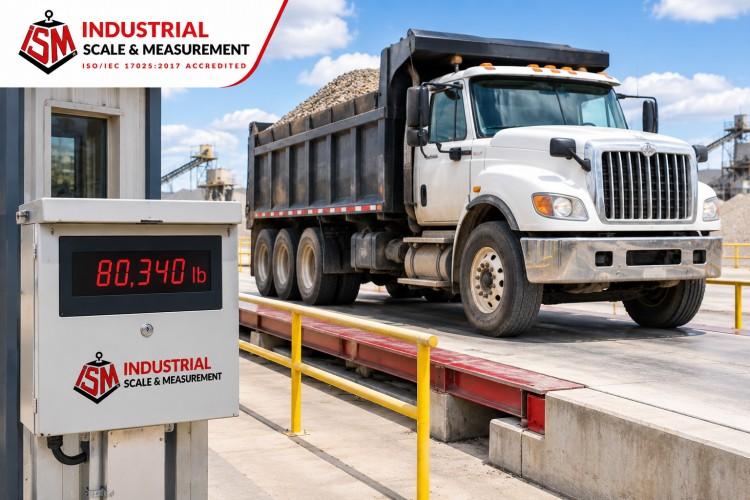
If the same truck produces different weights on different trips, you may immediately suspect the scale. Sometimes that is the right conclusion—but not always.
Truck weight readings can change because of load distribution, truck position, environmental conditions, debris, mechanical restrictions, or calibration issues. When you depend on accurate weight data for billing, inventory, transportation, or compliance, even a small inconsistency deserves attention.
If you operate trucks or weighing equipment in Houston, understanding these causes can help you determine whether the problem is with the truck, the weighing process, or the scale itself.
1. The Truck May Not Be Positioned the Same Way
A truck scale measures the force transferred through its weighing platform and load cells. If you position the vehicle differently each time, the weight distribution across the platform can change.
For example, a truck that stops with its wheels in a different location may place slightly different loads on individual sections or load cells. Uneven positioning can become more noticeable when the scale has mechanical restrictions, damaged components, or calibration problems.
You should establish a consistent weighing procedure. Make sure the entire vehicle is properly positioned on the platform, follow the same traffic pattern, and train drivers to stop at the designated location.
Consistent procedures make it easier to distinguish an operational problem from an equipment problem.
2. Your Cargo May Be Shifting
The truck itself may be the same, but its load may not be.
Loose materials such as aggregate, waste, grain, liquids, or other bulk products can move during transportation. Braking, acceleration, turns, and road conditions can redistribute the load.
This can change how weight is distributed across the truck's axles and across the scale platform. If you weigh the truck before and after movement, you may see differences even though no material was added or removed.
For this reason, you should compare readings under controlled conditions whenever possible.
3. Dirt and Debris Can Affect the Scale
A truck scale needs freedom of movement to measure weight correctly. Dirt, mud, rocks, and other debris can interfere with that movement or create unintended contact between the platform and surrounding structures.
This is especially important in Houston, where heavy traffic, rainfall, humidity, and industrial activity can contribute to contamination around weighing equipment. Regular cleaning and inspection can help prevent these conditions from becoming accuracy problems.
You should inspect the area around and beneath the platform as part of your routine maintenance process. If debris is restricting movement, cleaning the scale may be necessary before you assume that calibration is the problem.
4. Load Cells Can Drift or Develop Problems
Load cells are critical components of a truck scale because they convert mechanical force into an electrical signal used to calculate weight.
Over time, load cells, cables, junction boxes, and related components can experience wear or environmental stress. Moisture, corrosion, physical damage, wiring problems, or uneven loading can contribute to inconsistent readings.
If one part of the system is performing differently from the others, the scale may produce readings that vary depending on where the truck is positioned.
When repeated differences occur, professional inspection and calibration can help identify whether the issue is related to the load cells or another component.
5. Temperature and Weather Can Influence Performance
Environmental conditions can also affect weighing equipment.
Houston's heat, humidity, and rainfall can place additional stress on scale structures, electronics, load-cell seals, and cables. Changes in environmental conditions may contribute to measurement drift or mechanical problems when equipment is not properly maintained.
You should pay attention to when inconsistent readings occur. If differences appear primarily after heavy rain, extreme temperature changes, or long periods of operation, document those conditions. This information can help a technician diagnose the problem more efficiently.
6. Calibration May No Longer Match Actual Performance
Even a well-designed truck scale can require calibration and verification over time.
Calibration compares the scale's performance against known standards and helps determine whether readings remain within the required tolerance. Regular testing is particularly important when the scale is used for commercial transactions, inventory control, or regulatory purposes.
Industrial Scale & Measurement provides truck scale calibration and maintenance services in Houston to help businesses maintain accurate and dependable weighing systems. Its calibration capabilities also cover scales and load cells using traceable reference standards.
If you need a broader measurement review, you can also explore calibration services in Houston, TX for additional equipment and calibration requirements.
7. Foundation or Structural Problems May Be Involved
Your scale depends on more than electronics.
The foundation must remain stable, and the platform must maintain proper alignment and clearance. Soil movement, structural wear, water exposure, or physical damage can affect how the weighing system responds to a truck.
If readings vary even when the same truck, load, and weighing procedure are used, you should consider having the entire system inspected rather than focusing only on the indicator.
A professional inspection can help identify mechanical issues that a basic calibration check might not reveal.
How Can You Troubleshoot Different Truck Scale Weights?
When the same truck produces different readings, take a systematic approach:
- Repeat the weighing process using the same truck position and procedure.
- Check the load to make sure material has not shifted, leaked, or been added.
- Inspect for mud and debris around the scale platform.
- Record weather and operating conditions when inconsistent readings occur.
- Review calibration records and determine whether testing is due.
- Have the scale professionally inspected if the variation continues.
Do not simply adjust the indicator to make the numbers match. An adjustment without identifying the underlying cause can hide a mechanical or load-cell problem.
Choose Reliable Truck Scales in Houston, TX
When your business depends on weight data, consistency matters. Accurate readings support fair transactions, better inventory control, safer loading decisions, and regulatory compliance. Commercial weighing equipment in Texas is subject to accuracy and inspection requirements, making proper testing and maintenance especially important.
Industrial Scale & Measurement provides truck scale sales, installation, calibration, maintenance, and repair support for businesses in Houston and surrounding areas.
If your truck scale is producing inconsistent weights, do not wait for the problem to become a billing dispute or compliance issue. Contact Industrial Scale & Measurement to discuss your weighing system, inspection needs, and calibration requirements.
Frequently Asked Questions
1. Why does the same truck weigh differently on a truck scale?
Different readings can result from truck positioning, shifting cargo, debris, load-cell problems, environmental conditions, mechanical restrictions, or calibration issues.
2. Can mud and dirt affect truck scale accuracy?
Yes. Debris can restrict platform movement or create unintended contact with the scale structure, potentially causing inconsistent readings.
3. How often should you calibrate a truck scale?
Calibration frequency depends on usage, operating conditions, applicable requirements, and the scale manufacturer's recommendations. Regular verification helps identify accuracy problems before they become serious.
4. Can weather cause different truck scale readings?
Yes. Heat, humidity, rainfall, and moisture can affect components such as load cells, cables, junction boxes, and structural elements.
5. What should you do if your truck scale gives inconsistent weights?
Repeat the weighing procedure consistently, inspect for debris, verify the load, document conditions, and arrange professional inspection or calibration if the inconsistency continues.

 Arabic
 French
 Spanish
 Portuguese
 Deutsch
 Turkish
 Dutch
 Italiano
 Russian
 Romaian
 Portuguese (Brazil)
 Greek