
Anti-Bending Cable Gland Metalcableglands: Industrial Applications
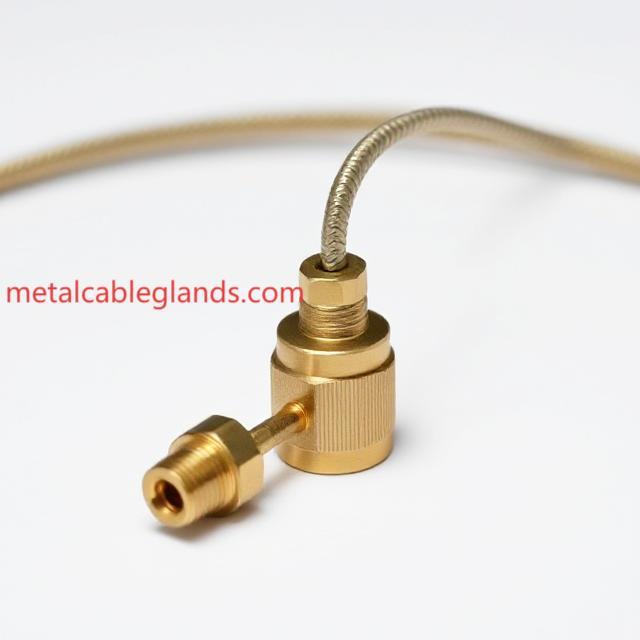
Cable installation in modern industrial equipment requires careful consideration of connection stability, routing direction, and mechanical protection. In applications where cables pass through compact spaces or operate near moving machinery, an Anti-Bending Cable Gland can provide additional support around the entry point. Selecting a suitable Anti-Bending Cable Gland also helps equipment manufacturers organize cable layouts and address installation challenges caused by restricted space or repeated movement. For electrical contractors, machinery producers, and industrial component distributors, understanding product construction and application requirements is an important part of choosing suitable cable accessories.
Cable Routing Challenges in Compact Equipment
Many electrical devices contain limited internal space, making cable arrangement an important part of equipment design. Cables may need to pass through enclosure walls, connect with internal terminals, or change direction before reaching their final positions.
When installation space is restricted, cables can develop sharp bends close to their entry points. This may create additional stress on the outer sheath and make cable positioning more difficult.
A protective cable entry accessory can help guide the cable into the enclosure while providing support around the connection area. This is particularly relevant for compact control panels, automation equipment, industrial sensors, and machinery with complicated internal wiring arrangements.
Before selecting a product, buyers should consider the cable's diameter, routing direction, enclosure dimensions, and available installation clearance. These details help determine whether a particular structure is appropriate for the intended application.
Design Features That Influence Installation Flexibility
The design of a cable gland affects how conveniently cables can be installed and organized. Products with extended protective sections provide a transition between the enclosure connection and the cable routing direction.
A flexible structure can help accommodate different installation angles while reducing abrupt directional changes near the entry point. Its dimensions and flexibility should correspond to the cable type and the surrounding equipment layout.
The housing also plays an important role. It provides the connection between the cable accessory and the enclosure, so thread specifications and mounting dimensions must be compatible.
Sealing components are another essential design feature. Depending on the product configuration, rubber sealing elements can help accommodate the cable and support the intended enclosure protection.
For equipment manufacturers, comparing these structural characteristics before purchasing can help avoid installation conflicts and improve consistency across different product models.
Metalcableglands: Product Options for Electrical Equipment
Industrial buyers often need cable accessories that can accommodate different enclosure designs and wiring requirements. Metalcableglands offers cable gland products and related connection components for various industrial applications.
When comparing product options, purchasing teams should pay attention to several technical details:
-
Cable compatibility: Confirm the supported cable diameter and clamping range.
-
Thread dimensions: Match the connection thread with the enclosure opening.
-
Material construction: Evaluate the material according to temperature, moisture, and mechanical conditions.
-
Flexible section: Consider the length, shape, and movement requirements of the cable.
-
Protection specifications: Check the documented performance of the complete installed assembly.
For customized applications, technical drawings and detailed product requirements can help suppliers understand the intended installation.
Buyers may also discuss packaging, labeling, order quantities, and sample availability before confirming procurement. Clear communication about these details helps both parties coordinate product specifications and purchasing arrangements.
Manufacturing Methods and Consistency Control
Cable gland manufacturing requires careful coordination between material processing, component forming, thread production, and final assembly.
For nylon products, injection molding is commonly used to create the housing and other structural sections. The quality of the mold and processing conditions can influence the finished component's dimensions, appearance, and physical characteristics.
Thread processing must also meet the specified requirements. Accurate threads support appropriate engagement with the enclosure and help reduce installation difficulties.
Manufacturers should inspect the finished components for dimensional consistency, surface defects, and structural condition. Flexible sections may require additional examination to confirm that their construction matches the intended product design.
Sealing elements should be checked for correct dimensions and assembly positions. Depending on the product specifications, manufacturers may also conduct relevant mechanical or environmental performance tests.
Packaging is the final stage of product preparation. Suitable packaging helps prevent scratches, deformation, and contamination during storage and transportation. Clear identification labels also make it easier for distributors to manage different product models.
Application Planning and Supplier Evaluation
Choosing cable protection components should begin with a clear understanding of the working environment. Industrial machinery, outdoor electrical cabinets, and automated production equipment may involve different cable routing conditions.
For installations exposed to vibration, buyers should consider how the cable is supported and whether additional routing protection is necessary. In compact enclosures, the available space and direction of cable entry may be more important.
Product samples can help buyers evaluate installation convenience, material characteristics, and compatibility with existing equipment. Comparing samples with technical drawings can also help identify dimensional differences before larger purchasing orders are placed.
Supplier evaluation should include manufacturing capabilities, product information, customization options, communication efficiency, and delivery arrangements. These factors are relevant for businesses that require consistent sourcing across multiple equipment models.
Maintaining accurate purchasing records can further simplify future orders. Recording thread specifications, cable diameter ranges, materials, and compatible enclosure types helps reduce repeated confirmation work.For electrical equipment manufacturers, distributors, and industrial purchasing teams seeking suitable cable connection accessories, reviewing product specifications is a practical first step. Visit https://www.metalcableglands.com/ to explore available products and discuss cable installation requirements with the supplier.

 English
 Arabic
 French
 Spanish
 Deutsch
 Turkish
 Dutch
 Italiano
 Russian
 Romaian
 Portuguese (Brazil)
 Greek