
Foundayo Dosing Schedule: 0.8mg to 17.2mg Titration Guide
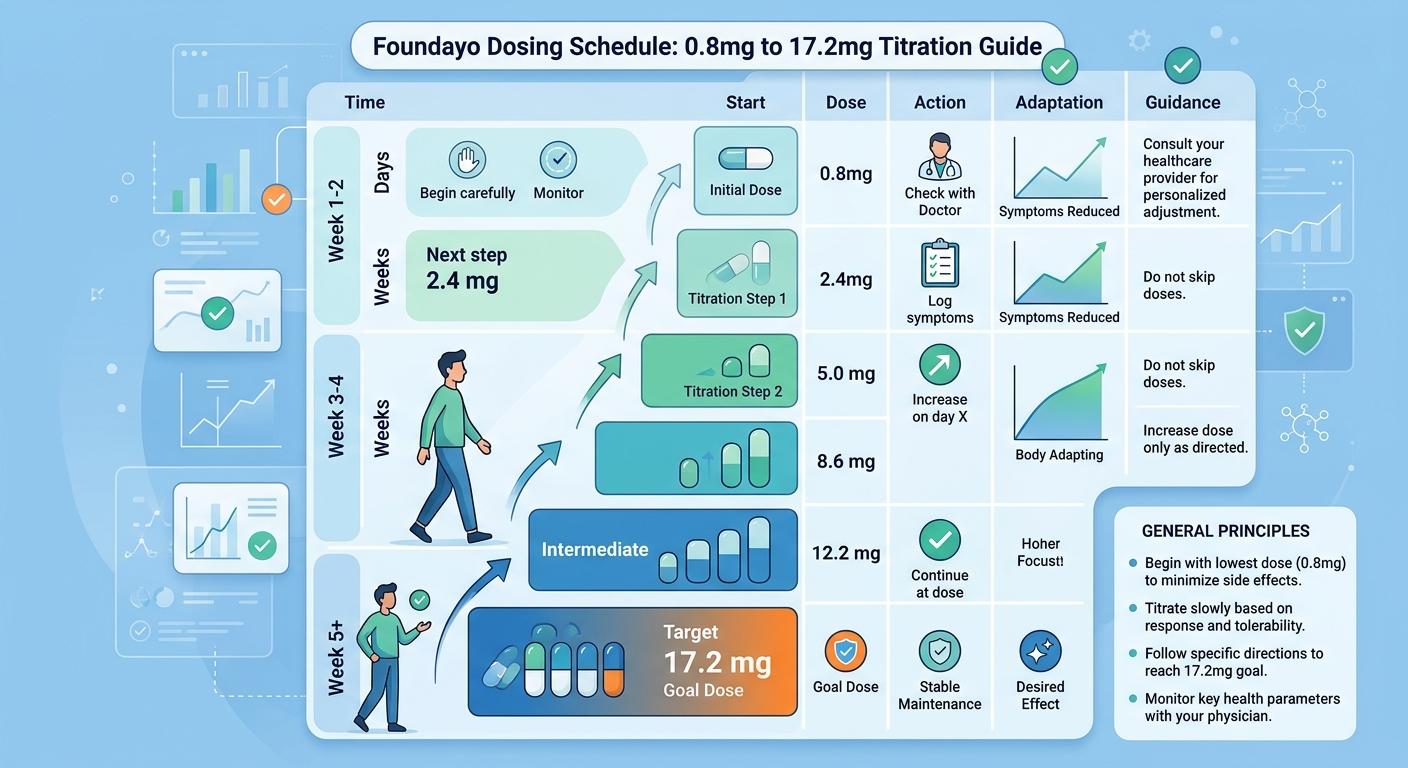
Starting an oral GLP-1 medication for weight management involves more than choosing a tablet strength. The dose needs to increase gradually so the body has time to adjust and gastrointestinal side effects can be better managed. The prescribed Foundayo dosing schedule begins at 0.8 mg once daily and may progress through several strengths, reaching a maximum of 17.2 mg when clinically appropriate.
The active ingredient, orforglipron, is an oral GLP-1 receptor agonist developed for adults with obesity or certain adults with overweight and weight-related health conditions. In the UAE, the Emirates Drug Establishment approved the treatment in April 2026. It is a prescription medicine and should be used alongside a reduced-calorie eating plan, increased physical activity and medical supervision.
Foundayo Dose Titration: From 0.8mg to 17.2mg
The official prescribing information recommends starting with a low daily dose and increasing it only after a minimum period at each stage. This gradual approach is intended to reduce the risk of digestive adverse reactions.
The available tablet strengths are:
| Dose | Minimum time before the next increase |
|---|---|
| 0.8 mg | At least 30 days |
| 2.5 mg | At least 30 days |
| 5.5 mg | At least 30 days |
| 9 mg | At least 30 days |
| 14.5 mg | At least 30 days |
| 17.2 mg | Maximum daily dose |
The first two increases are specified in the prescribing instructions. After reaching 5.5 mg, the prescriber may consider increasing to 9 mg, 14.5 mg or 17.2 mg, depending on treatment response and tolerability. Each increase requires at least 30 days on the current dose.
Importantly, this is not a schedule that every patient must complete. Some people may remain on a lower strength if it provides an appropriate response and is well tolerated. Others may need a different treatment approach.
What Happens During Each Stage?
Starting dose: 0.8 mg
The initial dose introduces the medicine gradually. Patients take one tablet daily and monitor how they respond. Mild digestive symptoms may occur as the body adjusts, so it is important to report persistent or troublesome reactions rather than increasing the dose independently.
Second stage: 2.5 mg
After at least 30 days at the starting strength, the prescriber may increase the daily dose to 2.5 mg. The purpose is to continue gradual adjustment while monitoring appetite changes, weight trends and tolerability.
Third stage: 5.5 mg
After another minimum 30-day period, the dose may increase to 5.5 mg. This stage allows the healthcare professional to evaluate whether the current amount is providing sufficient benefit without causing difficult side effects.
Higher strengths: 9 mg, 14.5 mg and 17.2 mg
Further increases are optional and based on individual needs. The maximum strength is 17.2 mg once daily. Reaching it should not be treated as the goal for every patient. A lower dose may be more appropriate depending on the person's response, medical history and tolerance.
How Should You Take the Daily Tablet?
Unlike some oral weight-management medicines that require specific fasting conditions, this treatment can be taken once daily with or without food. The prescribing instructions do not require a particular time of day.
A few administration rules are important:
-
Take one tablet per day, following the prescribed strength.
-
Swallow the tablet whole.
-
Do not crush, chew or break it.
-
Do not take multiple tablets to create a higher dose.
-
Avoid changing the strength without speaking to the prescriber.
Consistency can make it easier to follow the treatment plan. Choosing a convenient daily time may help establish a routine, but the most important point is to follow the instructions provided with the prescription.
What If You Miss a Dose or Stop Taking It?
If you forget a dose, the manufacturer's patient guidance says to take it as soon as possible. Do not take two doses on the same day to make up for the missed tablet.
A longer interruption needs additional attention. If seven or more consecutive daily doses are missed, contact the prescribing healthcare professional before restarting. The official information advises restarting dose escalation at a lower strength to reduce the likelihood of gastrointestinal reactions. The appropriate restart dose should be determined by the clinician rather than guessed.
Do not restart at the previous highest strength after an extended break without medical advice.
Common Side Effects During Dose Increases
Digestive symptoms are among the most frequently reported adverse reactions. They may be more noticeable when treatment begins or the dose increases.
Common reactions include:
-
Nausea and vomiting
-
Diarrhoea or constipation
-
Abdominal pain or bloating
-
Indigestion and acid reflux
-
Belching and flatulence
-
Fatigue and headache
Eating smaller meals, staying hydrated and avoiding foods that worsen nausea may help some people manage mild symptoms. However, persistent vomiting or diarrhoea can cause dehydration and may affect kidney function.
Seek prompt medical advice for severe or persistent abdominal pain, especially if it spreads towards the back or occurs with vomiting. This can be a warning sign of pancreatitis. Severe allergic symptoms, such as swelling of the face or throat or difficulty breathing, require emergency care.
The medicine also carries warnings relating to gallbladder problems, low blood sugar when combined with certain diabetes medicines, and possible thyroid C-cell tumour risk. It is not recommended for people with severe gastroparesis.
Who Should Avoid It or Discuss Risks Before Starting?
A medical consultation is essential before treatment. The medicine is contraindicated in people with a personal or family history of medullary thyroid carcinoma (MTC), or those with Multiple Endocrine Neoplasia syndrome type 2 (MEN 2). It should also not be used by anyone with a known serious allergy to its ingredients.
Additional precautions apply to people with a history of pancreatitis, gallbladder disease, diabetic retinopathy or significant digestive problems. Patients taking insulin or sulfonylureas may need adjustments to their diabetes treatment to reduce the risk of hypoglycaemia.
Pregnancy is another important consideration. Weight-loss treatment is not recommended during pregnancy, and the medicine should be discontinued if pregnancy is recognised. Breastfeeding is not recommended during treatment.
It can also affect the absorption of some oral medicines because it slows gastric emptying. People using oral hormonal contraceptives should discuss contraception with their clinician. The prescribing information advises switching to a non-oral method or adding a barrier method for 30 days after starting treatment and for 30 days after each dose increase.
How Does Valeo Health Support Oral Weight Management in Dubai?
Valeo Health lists the 0.8 mg starting-strength product as part of its UAE weight-management offering. Its programme describes a doctor-led process that includes an online consultation, prescribed medication when appropriate, and ongoing support with nutrition and lifestyle changes.
The initial assessment matters because not everyone who wants to lose weight is eligible for prescription treatment. A clinician can review BMI, existing health conditions, medication use and previous weight-management efforts before deciding whether this option is suitable.
Valeo also describes monthly teleconsultations and personalised dietitian support within its broader programme. These services can help patients discuss treatment progress, report side effects and review their plan as their needs change.
What to Discuss With Your Doctor Before Increasing Foundayo
Before moving to a higher strength, discuss appetite changes, weight trends, digestive symptoms and any new medication you have started. Ask whether the current dose has been given enough time to work and whether a higher strength is clinically necessary. The maximum dose is an upper limit, not a target that every patient needs to reach.
Frequently Asked Questions
1. What is the starting dose?
The recommended starting strength is 0.8 mg once daily. It is used for at least 30 days before a prescriber considers increasing it to 2.5 mg.
2. How long does it take to reach 17.2 mg?
The time varies because each stage requires at least 30 days, and further increases depend on response and tolerability. Reaching the maximum may take several months, and some patients may not need that strength.
3. Do I have to increase my dose every 30 days?
No. Thirty days is the minimum time before a possible increase, not an instruction to increase automatically. Your clinician may recommend remaining at the current strength or changing the treatment plan.
4. Can I take the tablet after eating?
Yes. It can be taken once daily with or without food. Swallow it whole and do not crush, chew or break it.
5. What is the maximum daily dose?
The maximum recommended daily dose is 17.2 mg. Do not exceed this amount or take multiple tablets to achieve a higher dose.
6. What should I do if I miss a dose for several days?
Do not double the next dose. If seven or more consecutive doses have been missed, contact your healthcare professional because a lower-dose restart and renewed escalation may be necessary.
7. Is the medicine available in the UAE?
Orforglipron received approval from the UAE's Emirates Drug Establishment in April 2026. Valeo Health currently lists the 0.8 mg starting-strength product in its UAE weight-management programme. Availability of other strengths should be confirmed with the provider and prescribing clinician.
Conclusion
Gradual dose escalation is an important part of oral GLP-1 treatment. Starting at 0.8 mg and allowing at least 30 days between potential increases gives healthcare professionals time to assess response and manage side effects. Although 17.2 mg is the maximum daily strength, it is not necessary or suitable for everyone.
For people considering treatment in Dubai, a doctor-led programme can help determine eligibility, select an appropriate dose and monitor progress. Medication should always be combined with sustainable nutrition and activity changes, with dose adjustments made only under professional guidance.
Medical Disclaimer: This article is for educational purposes only and does not replace medical advice, diagnosis or treatment. Orforglipron is a prescription medicine. Dosing, dose escalation and restarting after missed doses must be determined by a qualified healthcare professional using the current local prescribing information. Do not start, stop or change medication without consulting your doctor.

 English
 Arabic
 French
 Spanish
 Portuguese
 Deutsch
 Turkish
 Dutch
 Italiano
 Russian
 Romaian
 Portuguese (Brazil)