
Shawarma Production Line: Planning an Efficient Industrial Food Manufacturing Facility
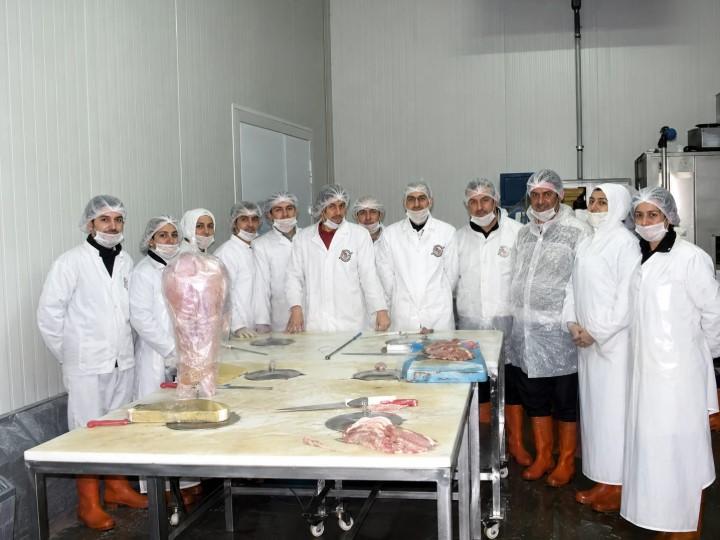
A modern shawarma production line is essential for businesses planning to manufacture high-quality meat products on a commercial scale. As demand for convenient and ready-to-serve food continues to grow, restaurants, supermarkets, catering companies, and food distributors require reliable manufacturers capable of maintaining consistent product standards. Establishing an efficient production system requires careful planning, suitable industrial machinery, and a clear understanding of every manufacturing stage.
Developing a professional shawarma factory involves more than purchasing individual machines. Investors must consider production capacity, factory layout, raw material handling, meat preparation, processing equipment, refrigeration, packaging, and food safety. Bringing these elements together through professional project planning helps create a manufacturing facility that supports productivity and long-term business growth.
Understanding the Shawarma Manufacturing Process
The manufacturing process begins with selecting suitable raw materials. Depending on the intended product, manufacturers may use chicken, beef, lamb, or different meat combinations. Raw material quality directly influences the flavour, texture, appearance, and consistency of the finished product.
After receiving the meat, employees carry out quality inspections before transferring it to the preparation section. Trimming, cutting, and portioning are performed according to the product specifications. The prepared ingredients are then transferred to industrial mixing equipment, where seasonings and other ingredients are distributed according to the established formulation.
Following preparation, the meat is shaped and assembled into the required shawarma format. This stage requires consistent handling to achieve uniform dimensions, weight, and product structure.
Depending on the manufacturing method, the process may continue with cooking, controlled cooling, slicing, portioning, or packaging. Each operation should follow documented procedures to maintain product quality and comply with applicable food safety requirements.
Selecting the Right Industrial Machinery
Machinery selection is one of the most important decisions when establishing a commercial shawarma manufacturing facility. The required equipment depends on the expected production volume, product specifications, available factory space, and desired automation level.
A professional production facility may require industrial meat preparation machines, mixers, cutting systems, forming equipment, doner assembly machinery, cooking units, refrigeration systems, and packaging equipment.
Machine capacity should be balanced across the entire production process. For example, if the mixing section processes more material than the forming or packaging section can handle, production bottlenecks may develop. Selecting compatible equipment helps maintain a continuous workflow and improves the use of available resources.
Investors should also evaluate construction materials, energy consumption, cleaning requirements, maintenance accessibility, and spare parts availability. Food-grade stainless steel equipment is commonly preferred because it supports hygienic operations and regular sanitation.
Professional machinery procurement consultancy can help investors compare technical specifications, identify suitable equipment manufacturers, and coordinate purchasing decisions according to the factory's production requirements.
Factory Layout and Production Planning
A well-designed factory layout plays an important role in manufacturing efficiency. The facility should provide organised areas for raw material receiving, chilled storage, meat preparation, processing, assembly, cooking, cooling, packaging, and finished-product storage.
The movement of materials between these areas should follow a logical sequence. Raw and cooked product handling sections must be appropriately separated to reduce cross-contamination risks and support effective hygiene management.
Infrastructure planning is equally important. Electricity, water supply, drainage, ventilation, refrigeration, and waste management systems should be designed according to the selected machinery and expected production capacity.
Investors should also consider employee movement, equipment maintenance access, cleaning facilities, and opportunities for future expansion. A carefully planned facility can reduce unnecessary handling and make daily operations more efficient.
Improving Productivity Through Automation
Automation can improve manufacturing consistency and reduce repetitive manual work. Depending on production requirements, businesses may introduce automatic mixing, cutting, forming, weighing, and packaging systems.
These technologies help standardise repetitive operations and support more predictable production schedules. They can also reduce certain handling errors and allow employees to focus on quality control, supervision, and other essential responsibilities.
However, automation should be selected according to actual business requirements. Purchasing advanced equipment without considering production volume, staffing, and maintenance capabilities may increase investment costs without providing sufficient operational benefits.
Food Safety and Quality Control
Food safety must remain a priority throughout the manufacturing process. Raw materials should undergo proper inspection, while equipment and food-contact surfaces must follow established cleaning and sanitation procedures.
Temperature control is particularly important for meat products. Chilled storage, validated cooking procedures where applicable, controlled cooling, and suitable finished-product storage conditions help maintain product safety.
Manufacturers should also establish procedures for ingredient control, allergen management, product labelling, and traceability. Regular quality inspections can identify production problems early and support consistent manufacturing standards.
Employee Training and Operational Management
Even advanced machinery requires trained employees. Workers should understand equipment operation, material handling, cleaning procedures, and production standards.
Production managers and food engineers must monitor machinery performance, production capacity, material usage, and product consistency. Practical training helps employees follow standard operating procedures and improves coordination between production departments.
Including employee training in the initial factory establishment project helps prepare the workforce before regular manufacturing begins.
Conclusion
Establishing an efficient shawarma manufacturing facility requires careful coordination between machinery selection, production planning, factory design, food safety, and employee training. Every stage contributes to the quality and consistency of the finished product.
Investors should approach factory development as a complete project rather than focusing exclusively on purchasing machinery. Professional consultancy covering factory layout, equipment procurement, production processes, and technical training can help businesses make informed decisions and avoid unnecessary investment costs.

 English
 Arabic
 French
 Spanish
 Deutsch
 Turkish
 Dutch
 Italiano
 Russian
 Romaian
 Portuguese (Brazil)
 Greek