
How to Choose the Right Taxi App Development Company for Your Business
he way people book taxis has changed significantly with the growth of smartphones and digital services. Today, passengers expect convenient booking, real-time driver tracking, transparent fares, and secure online payments. For transportation businesses, having a reliable mobile application is becoming an important way to meet these expectations and remain competitive.
Whether you operate a local taxi service, manage a fleet of vehicles, or plan to launch a ride-hailing startup, investing in the right technology can help you reach more customers and simplify daily operations.
However, developing a successful taxi booking application requires careful planning, technical expertise, and an understanding of customer needs. This is why many businesses explore taxi app development companies that can transform their ideas into practical, scalable digital solutions.
Why Is Taxi App Development Important?
Traditional taxi booking methods often depend on phone calls, manual dispatching, and limited communication between drivers and passengers. These processes can create delays, booking confusion, and difficulties in managing multiple rides.
A dedicated taxi booking application can bring these activities together in one convenient platform. Customers can request rides, view estimated fares, track drivers, and receive trip updates directly from their smartphones.
For business owners, the application can provide better visibility into bookings, driver availability, completed trips, and revenue. Automated notifications and digital records can also reduce administrative work.
A well-designed taxi application can support different business models, including local cab services, airport transfers, corporate transportation, carpooling, and on-demand ride-hailing platforms.

Essential Features of a Modern Taxi Booking App
Before starting development, it is important to understand which features your business and customers actually need. The right combination will depend on your service area, operating model, and target audience.
1. Passenger Booking Interface
The passenger application should make booking a ride simple. Users should be able to enter pickup and drop-off locations, select a suitable vehicle, review estimated fares, and confirm their bookings without unnecessary steps.
A clean interface can improve the customer experience and encourage repeat usage.
2. Real-Time GPS Tracking
GPS tracking allows passengers to see their assigned driver's location and estimated arrival time. Drivers can also receive navigation assistance to reach pickup points and destinations efficiently.
Accurate location services can improve coordination, reduce uncertainty, and help passengers feel more informed throughout their journeys.
3. Driver Application
Drivers need a dedicated interface to accept or reject ride requests, navigate routes, update trip status, and review their earnings. The application should be easy to use while supporting safe driving practices.
4. Secure Payment Integration
A modern taxi app can support suitable payment methods, such as cards, digital wallets, and cash, depending on the business model and local requirements. Clear fare breakdowns and digital receipts can help build customer trust.
5. Admin Dashboard
An administrative dashboard helps business owners manage drivers, monitor bookings, review transactions, handle customer concerns, and access operational reports. These tools can make it easier to identify service issues and make informed decisions.
6. Ratings and Notifications
Passenger ratings, driver feedback, booking confirmations, and trip notifications support communication and accountability. These features also help businesses identify areas where service quality can improve.
How to Choose the Right Development Partner
Selecting a development partner is one of the most important decisions in a taxi app project. Not every software company has the same experience, technical capabilities, or understanding of transportation workflows.
When comparing taxi app development companies, consider the following factors before making your decision.
Relevant experience: Review the company's portfolio to understand whether it has experience with mobile applications, booking platforms, GPS integration, payment systems, or similar on-demand services.
Technical capabilities: Check whether the team can work with the technologies required for your application, including Android, iOS, backend systems, APIs, cloud infrastructure, and real-time data processing.
Communication and project management: Regular updates, clear responsibilities, documented requirements, and milestone-based planning can help prevent misunderstandings during development.
Security practices: Your application may handle personal information, location data, and payment-related information. Discuss access controls, data protection, testing, and applicable compliance requirements before development begins.
Scalability: Your initial application may serve a limited number of users, but future growth could increase traffic, bookings, and driver activity. The software architecture should be planned around realistic growth expectations.
Post-launch support: Applications require updates, bug fixes, security improvements, and compatibility testing. Confirm what maintenance and support services are included in the proposed agreement.
Understanding Taxi App Development Costs
The cost of developing a taxi booking application depends on its features, technical complexity, design requirements, integrations, and development team's rates.
A basic application with essential booking functionality may require less investment than a comprehensive platform with separate passenger and driver apps, an advanced dispatch system, multiple payment gateways, analytics, and AI-powered features.
Businesses should also account for expenses beyond the initial development stage. These may include cloud hosting, mapping services, SMS notifications, payment processing fees, software licenses, maintenance, and future enhancements.
Before approving a budget, request a detailed proposal that explains the project scope, deliverables, estimated timeline, payment milestones, and ongoing costs. Comparing proposals based on functionality and long-term value is more useful than choosing a provider solely because it offers the lowest price.
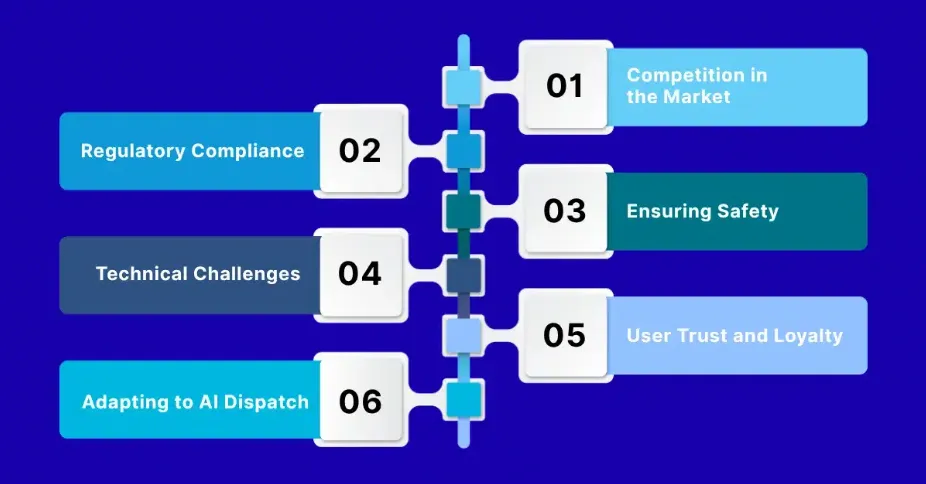
Common Challenges and How to Address Them
Taxi app development involves several practical challenges. Understanding them early can help businesses prepare a stronger project plan.
Driver availability and ride allocation: A dispatch system needs to assign suitable drivers based on factors such as location, availability, and trip requirements. Clear dispatch rules can help improve the booking experience.
Location accuracy: GPS signals and mapping data may not always be perfect. Testing across different devices and operating conditions can help identify problems before launch.
Passenger and driver safety: Businesses should consider driver verification, trip records, emergency assistance options, and appropriate reporting features. Safety requirements should be evaluated according to the markets where the application will operate.
Changing demand: Booking volumes may vary by location, weather, time, and local events. Analytics can help operators understand demand patterns and plan driver availability more effectively.
Customer retention: Convenient booking alone may not be enough to retain customers. Reliable service, transparent pricing, responsive support, and consistent ride quality all contribute to a positive experience.
Addressing these challenges requires cooperation between business stakeholders, designers, developers, and testing specialists.
How GMTA Software Can Support Your Taxi App Project
GMTA Software Solutions provides custom software and mobile application development services for businesses with different technical and operational requirements. Its development capabilities can support companies looking to create digital products tailored to their business goals.
For transportation businesses, the development process begins with understanding the intended service model, target audience, essential features, and operational challenges. These requirements help determine the appropriate application structure and technology choices.
Depending on the project's scope, a taxi booking solution may include passenger and driver applications, an administrative dashboard, location services, payment integration, notifications, and reporting tools.
GMTA Software emphasizes collaborative development, helping clients review requirements and maintain visibility into project progress. Businesses can discuss their priorities, evaluate proposed features, and plan future improvements as their needs evolve.
When evaluating taxi app development companies, it is worth considering how a potential partner approaches communication, software quality, customization, and long-term maintenance—not just the initial launch.
You can explore GMTA Software's existing article on taxi app development providers here.
Future Trends in Taxi App Development
Taxi booking technology continues to evolve as businesses explore new ways to improve efficiency and customer experiences.
Artificial intelligence can help analyze demand patterns, support dispatch decisions, and improve operational forecasting. Data analytics can help businesses understand popular routes, booking trends, and customer preferences.
Other developments include electric vehicle integration, corporate ride management, improved accessibility features, and more flexible payment options. Some businesses may also explore automated customer support to answer common booking questions.
These technologies should be selected according to actual business needs. A successful application does not necessarily require every emerging feature; it needs the right features implemented reliably.
Conclusion
A successful taxi booking application combines convenient design, dependable technology, secure transactions, and efficient ride management. Before investing in development, businesses should define their goals, prioritize essential features, establish a realistic budget, and evaluate potential development partners carefully.
Comparing taxi app development companies based on technical expertise, relevant experience, communication, scalability, and ongoing support can help you make a more informed decision.
With a clear strategy and the right development partner, your taxi booking platform can provide a better experience for passengers, support drivers, and help your transportation business build a stronger digital presence.
Ready to develop your taxi booking application? Contact GMTA Software to discuss your project requirements and explore a solution designed around your business goals.

 English
 Arabic
 French
 Spanish
 Portuguese
 Deutsch
 Dutch
Dutch
 Italiano
 Russian
 Romaian
 Portuguese (Brazil)
 Greek
Greek