
2-CMC vs 3-CMC vs 4-CMC: The Structural Difference
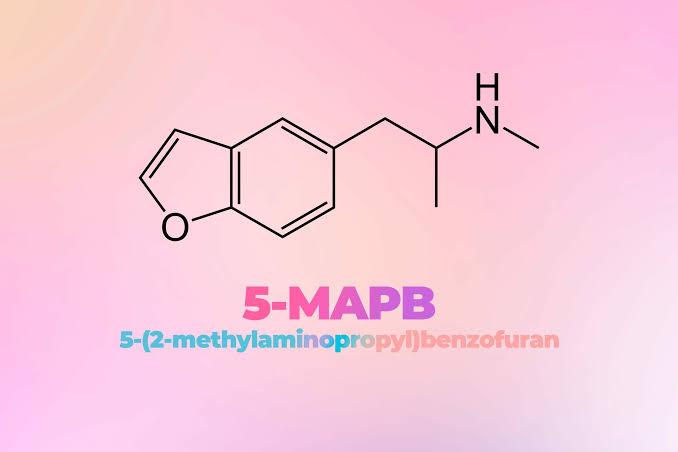
2-CMC, 3-CMC, and 4-CMC belong to the same family of chloromethcathinones, but they are distinct chemical compounds. The main structural difference is the position of the chlorine atom on the aromatic ring. Because of this difference, they are classified as positional isomers.
What Does the Position Mean?
The numbering refers to locations on the phenyl ring within the methcathinone structure.
-
2-CMC: chlorine occupies the 2-position.
-
3-CMC: chlorine occupies the 3-position.
-
4-CMC: chlorine occupies the 4-position.
The compounds retain the same basic molecular framework, but moving the chlorine substituent changes the three-dimensional and electronic arrangement of the molecule.
Why Positional Isomers Matter
It can be tempting to treat 2-CMC, 3-CMC, and 4-CMC as minor variations of the same substance. Chemically, however, they should be identified separately.
Positional isomers can have different chromatographic behavior and fragmentation characteristics. They may also differ in stereochemical stability and other measurable properties. A 2024 study specifically investigated the stability of 2-, 3-, and 4-CMC and found differences in their rates of racemization under the conditions examined.
How Laboratories Tell Them Apart
Identifying these compounds can require more than simply measuring molecular mass. Mass spectrometry is highly useful for detecting synthetic cathinones, but closely related positional isomers can produce very similar mass-spectral information.
For this reason, researchers have developed separation methods that distinguish the three CMC isomers before mass-spectrometric detection. A published HPLC-MS/MS method successfully achieved simultaneous chemical and enantioselective separation of 2-, 3-, and 4-CMC.
More recent analytical research has also demonstrated separation of all three positional isomers and their corresponding enantiomers using supercritical fluid chromatography coupled with tandem mass spectrometry.
The Key Difference
The simplest way to understand the distinction is to focus on the chlorine position:
2-CMC → ortho position
3-CMC → meta position
4-CMC → para position
Thus, although 2-CMC, 3-CMC, and 4-CMC share a common chemical family and closely related molecular formulas, they are not interchangeable names for one compound.
For analytical, forensic, and research purposes, accurately distinguishing these positional isomers is important. Modern chromatographic and mass-spectrometric methods provide laboratories with tools to establish which specific CMC isomer is present in a sample. {https://chemdare.com/}

 English
 French
 Spanish
 Portuguese
 Deutsch
 Turkish
 Dutch
Dutch
 Italiano
 Russian
 Romaian
 Portuguese (Brazil)
 Greek
Greek