
How a Teachers Assistant Course Prepares You to Support Students Effectively
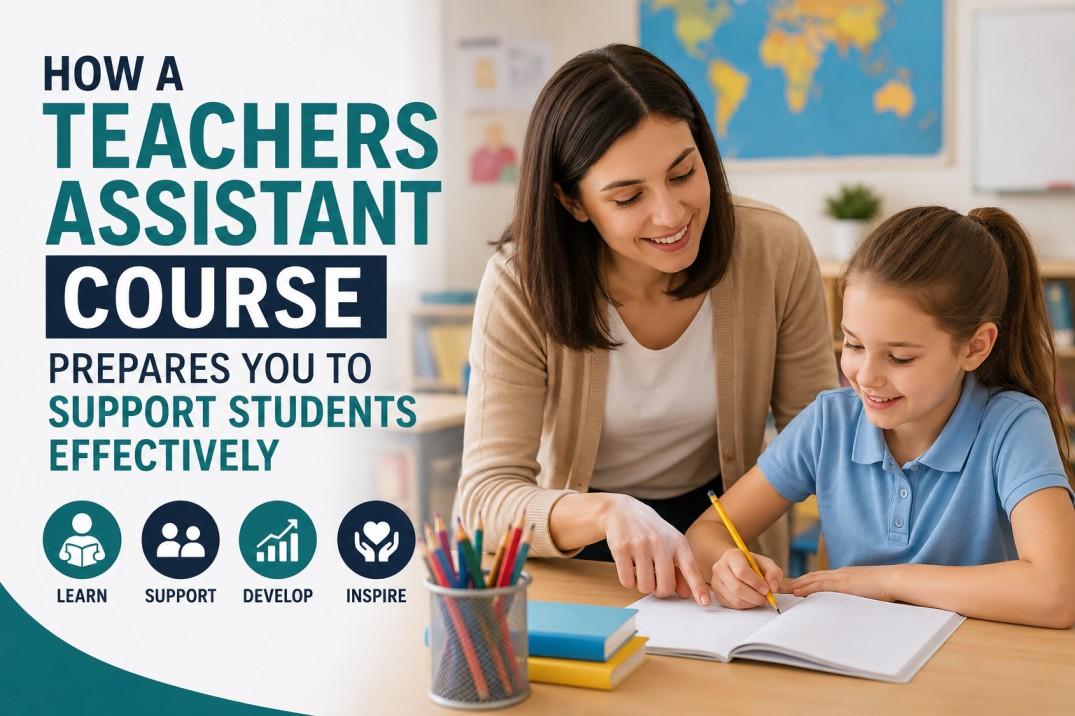
The role of a teaching assistant has become increasingly important in modern education. As classrooms become more diverse and student needs continue to evolve, schools rely on skilled support staff to help create positive learning environments. Teaching assistants work closely with teachers and students, providing valuable assistance that contributes to academic success and personal development.
For individuals interested in entering the education sector, completing a teachers assistant course can provide the knowledge, practical skills, and confidence needed to make a meaningful impact. These courses are designed to prepare learners for the realities of classroom support while helping them understand the responsibilities that come with working alongside teachers and students.
Understanding the Role of a Teaching Assistant
Teaching assistants play a vital role in supporting educational activities. Their responsibilities often include helping students with classwork, assisting teachers with lesson preparation, supervising small groups, and providing additional support to learners who may need extra guidance.
Unlike classroom teachers, teaching assistants focus heavily on individualized support. This can involve helping students stay engaged, clarifying instructions, encouraging participation, and assisting children with varying learning abilities. Effective support requires patience, communication skills, and a strong understanding of classroom dynamics.
A structured training programme helps future teaching assistants develop these essential competencies before entering the workplace.
Building Strong Communication Skills
One of the most important skills for any teaching assistant is communication. Students learn in different ways and often require information to be presented clearly and patiently. Teaching assistants must also communicate effectively with teachers, parents, and other school staff.
Training programmes typically introduce learners to communication techniques that promote understanding and engagement. Participants learn how to listen actively, provide constructive feedback, and adapt their communication style to suit different age groups and learning needs.
Strong communication helps build trust with students, making it easier to encourage participation and support academic progress.
Learning How to Support Different Learning Needs
Every classroom contains students with unique strengths, challenges, and learning preferences. Some students may require additional academic support, while others may benefit from emotional encouragement or behavioural guidance.
A well-designed teachers assistant course helps learners understand how to support students with diverse educational needs. Topics often include inclusive education, differentiated learning strategies, and methods for assisting children with additional learning requirements.
This knowledge enables future teaching assistants to contribute positively to an inclusive classroom environment where every student has the opportunity to succeed.
Developing Classroom Management Skills
Maintaining a productive classroom environment requires effective classroom management. While teachers take primary responsibility for managing the class, teaching assistants play a significant supporting role.
Training often covers classroom behaviour strategies, conflict resolution techniques, and methods for encouraging positive student conduct. Understanding these principles helps teaching assistants respond appropriately to challenges while maintaining a supportive atmosphere.
Effective classroom management not only improves learning outcomes but also creates a safer and more enjoyable experience for students.
Gaining Confidence in Supporting Learning Activities
Many aspiring teaching assistants worry about their ability to help students understand lessons or complete tasks successfully. Training programmes address these concerns by introducing practical approaches to supporting learning activities.
Participants learn how to assist with literacy, numeracy, reading exercises, and group projects. They also gain insights into how teachers plan lessons and assess student progress.
This foundation allows teaching assistants to provide meaningful support without disrupting the teacher's instructional goals. As a result, they become valuable members of the educational team.
Understanding Child Development
An effective teaching assistant understands that children develop academically, socially, and emotionally at different rates. Recognizing these developmental stages helps support students in ways that are appropriate and beneficial.
Many educational training programmes include modules on child development. Learners explore how children grow, learn, and interact with their environment. This understanding helps teaching assistants identify potential challenges and provide support that aligns with each student's needs.
By understanding developmental milestones, teaching assistants can better contribute to student wellbeing and educational success.
Promoting Inclusive Learning Environments
Inclusion is a fundamental principle of modern education. Schools aim to ensure that all students feel valued, respected, and supported regardless of their backgrounds or abilities.
Training helps future teaching assistants understand the importance of equality, diversity, and inclusion in educational settings. Learners discover strategies for encouraging participation and helping students overcome barriers to learning.
Institutions such as UK Open College recognize the importance of preparing learners to work effectively in inclusive environments. Through comprehensive training, students gain practical knowledge that supports modern educational practices.
Enhancing Professionalism and Responsibility
Working in a school environment requires professionalism, confidentiality, and a strong sense of responsibility. Teaching assistants regularly interact with children and often handle sensitive information.
Training programmes cover professional conduct, safeguarding principles, and ethical responsibilities. Learners gain a clear understanding of school policies and the importance of maintaining appropriate boundaries.
These skills help teaching assistants earn the trust of colleagues, students, and parents while contributing positively to the educational community.
Preparing for Career Opportunities
The education sector continues to offer opportunities for individuals who possess relevant skills and qualifications. Completing a teachers assistant course can improve employability by demonstrating a commitment to professional development and educational support.
Many learners use teaching assistant training as a pathway into schools, childcare settings, and other educational environments. Others may use the experience as a foundation for further study and career advancement within education.
Providers such as UK Open College offer flexible learning options that allow individuals to develop these skills while balancing personal and professional commitments.
Conclusion
Teaching assistants play an essential role in helping students succeed both academically and personally. Their support contributes to classroom effectiveness, student engagement, and inclusive learning experiences.
A quality training programme provides future teaching assistants with the knowledge and practical skills needed to perform their responsibilities confidently. From communication and classroom management to child development and inclusive education, the training covers the key areas required for effective student support.
For individuals seeking a rewarding role in education, developing these competencies can be an important first step toward making a positive difference in the lives of learners.
FAQs
1. What does a teaching assistant do?
A teaching assistant supports teachers and students by assisting with classroom activities, helping learners complete tasks, and contributing to a positive learning environment.
2. How long does it take to complete a teaching assistant course?
Course lengths vary depending on the provider and study format, ranging from a few weeks to several months.
3. Do I need previous experience to enrol in a teaching assistant course?
Many courses are designed for beginners and do not require prior classroom experience.
4. Can teaching assistant training help me find employment?
Yes. Relevant training can improve your skills, knowledge, and employability within schools and educational settings.
5. What skills are most important for teaching assistants?
Communication, patience, organization, teamwork, classroom support, and an understanding of child development are among the most valuable skills.

 Arabic
 French
 Spanish
 Portuguese
 Deutsch
 Turkish
 Dutch
Dutch
 Italiano
 Russian
 Romaian
 Portuguese (Brazil)
 Greek
Greek